
Topic overview
In brief
- A four-ton piece of a SpaceX Falcon 9 rocket collided with the Moon, creating a new crater.
- The impact occurred at a speed of 5,400 mph and is expected to provide valuable scientific data.
- This incident underscores the growing concern over space debris and its management.
Summary
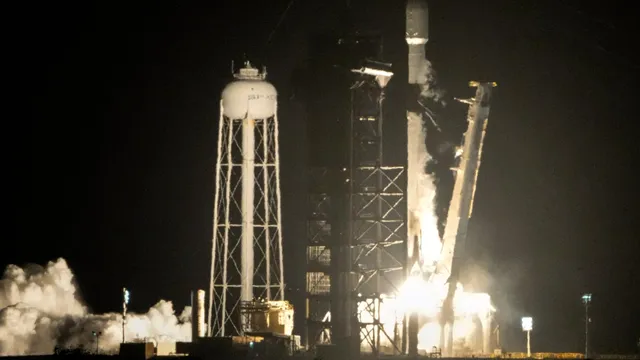
In early 2025, a SpaceX Falcon 9 rocket's second stage was launched to send lunar landers toward the Moon. However, due to the mission's requirements for more thrust, the rocket's upper stage was left in a long-term orbit around Earth. Over the next 18 months, gravitational forces from the Sun, Earth, and Moon altered its trajectory, leading to an unintentional collision with the Moon. On August 5, 2026, the rocket stage struck the lunar surface at approximately 5,400 mph, creating a new crater near the Einstein Crater. The impact was significant enough to eject lunar dust and rock but posed no danger to Earth or the Moon's overall stability. Scientists are now studying the impact site to gain insights into lunar geology and the behavior of lunar dust during high-velocity impacts. This event highlights the growing issue of space debris and the need for better management of leftover rocket hardware in orbit, especially as plans for sustained human presence on the Moon advance under NASA's Artemis program. The collision marks only the second known instance of manmade debris impacting the Moon, raising concerns about the increasing clutter in space and the potential risks it poses to future missions.