
Topic overview
In brief
- Researchers found an ichthyosaur fossil in Queensland, Australia, containing pterosaur remains.
- The fossil provides the first confirmed evidence of ichthyosaurs preying on pterosaurs.
- This discovery enhances our understanding of the ancient marine ecosystem and food chains.
Summary
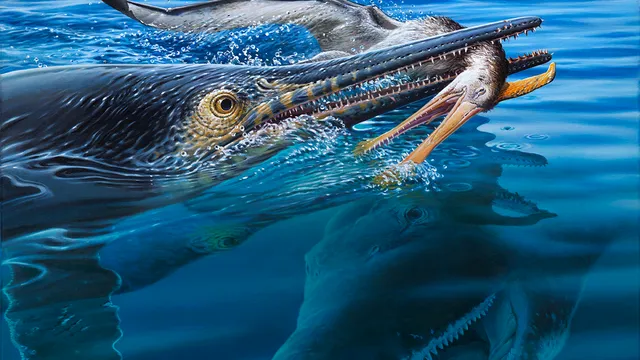
In Australia, a significant fossil discovery has provided insight into the prehistoric food chain of the ancient Eromanga Sea. The ichthyosaur fossil, nicknamed 'BOB,' was found in Queensland's outback and dates back approximately 100 million years. This fossil is notable for containing the remains of a pterosaur's jaw, along with fish and cephalopod remains, indicating that ichthyosaurs, which were dolphin-shaped marine reptiles, consumed flying reptiles. This finding marks the first confirmed evidence of such predation, shedding light on the dietary habits of these ancient creatures.
The ichthyosaur fossil, measuring between 20 to 23 feet long, was discovered in 2019 and has been the subject of recent research published in the journal Gondwana Research. The advanced neutron imaging techniques used by researchers allowed them to examine the fossil's stomach contents without damaging it. This method revealed the presence of pterosaur remains in an unusual position within the ichthyosaur's body cavity, suggesting that the animal may have struck the seafloor headfirst shortly after its last meal, which could explain the dislocation of its stomach contents.