
Topic overview
Briefly
- Rebel Creamery filed for Chapter 11 bankruptcy on August 14, 2026, in Utah.
- The filing follows a court order to pay $23.785 million to Van Leeuwen for packaging infringement.
- Rebel is appealing the judgment, which it lists as a disputed claim in its bankruptcy filing.
What happened
Rebel Creamery, a Utah-based ice cream maker known for its low-carb Rebel Ice Cream, filed for Chapter 11 bankruptcy protection on August 14, 2026, in the U.S. Bankruptcy Court for the District of Utah. The filing came just two days after the company appealed a federal court judgment that ordered it to pay $23.785 million to rival Van Leeuwen Ice Cream for infringing on Van Leeuwen's trade dress. The bankruptcy petition lists approximately $13.78 million in assets and $23.85 million in liabilities, with Van Leeuwen listed as an unsecured creditor holding a disputed claim for the full judgment amount, which is currently under appeal.
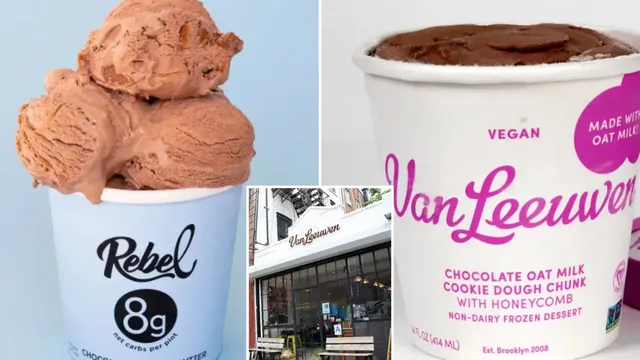
The legal dispute began in 2021 when Van Leeuwen, a New York-based ice cream company founded in 2008, sued Rebel for copying its distinctive packaging. Van Leeuwen's design features monochromatic cardboard pints with matching lids, a pastel color palette, black script lettering, and a minimalist aesthetic. Rebel, founded in 2017, began selling its pints in grocery stores in 2018. A Van Leeuwen employee discovered Rebel's packaging later that year or in early 2019, leading to the lawsuit.
In July 2026, U.S. District Judge Eric Komitee ruled that Rebel had intentionally infringed and diluted Van Leeuwen's trade dress. The judge found that Rebel's packaging was similar enough to cause actual consumer confusion and rejected Rebel's explanation that its founders had not seen Van Leeuwen's packaging. Komitee described Rebel's testimony about the design process as fabricated and stated that the similarity was unlikely to have occurred by chance. The court ordered Rebel to stop selling products with the infringing packaging and to redesign its pints.
Van Leeuwen initially sought $36.4 million in Rebel's profits, but the court reduced the award by 33%, reasoning that some of Rebel's sales were driven by demand for keto and better-for-you ice cream rather than the packaging. This reduction resulted in the $23.785 million judgment. Rebel filed an appeal on August 12, 2026, and then filed for bankruptcy two days later. The bankruptcy filing does not explicitly state that the judgment was the sole cause of the bankruptcy, but the judgment represents nearly all of Rebel's unsecured liabilities. Rebel's products are sold at major retailers including Walmart, Target, Kroger, and Safeway. The company's manager is Austin Archibald, and its bankruptcy counsel is Michael Johnson of Ray Quinney & Nebeker.

Comprehensive report
Full story,
in detail.
Trace the developments that led here, see how the story evolved, and understand the forces and wider context surrounding it.