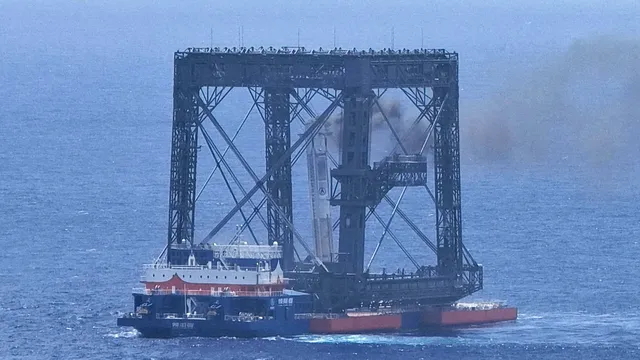
The development of reusable rocket technology has become a focal point in the space race between China and the United States, with both nations investing heavily in this area to enhance their capabilities for space exploration and satellite deployment. Reusable rockets are designed to be launched, recovered, and launched again, significantly reducing the cost of access to space. The United States, led by private companies such as SpaceX, has made significant strides in this technology, with the Falcon 9 rocket being a prime example. SpaceX's successful landings and re-flights of the Falcon 9 first stage have demonstrated the viability of reusability, allowing for rapid turnaround times and reduced launch costs. This has not only revolutionized commercial spaceflight but has also positioned the U.S. as a leader in the global space industry, fostering a competitive environment that encourages innovation and efficiency.
On the other hand, China has also made impressive advancements in reusable rocket technology, with the Long March 8 rocket being a notable example. The Chinese space program has focused on developing a fully reusable rocket system, aiming to achieve similar cost reductions and operational efficiencies as seen in the U.S. The Chinese government has prioritized space exploration as part of its broader strategy to enhance national prestige and technological prowess. Recent tests of the Long March 8 have shown promising results, indicating that China is on a path to achieving its goals in reusable launch systems. The competition between the two nations is not only technological but also geopolitical, as both seek to assert their dominance in space exploration and satellite deployment.
The implications of reusable rocket technology extend beyond mere cost savings; they also influence the strategic landscape of space exploration. The ability to launch and recover rockets efficiently allows for more frequent missions, which can lead to advancements in scientific research, satellite deployment, and even potential manned missions to the Moon and Mars. As both China and the U.S. continue to refine their reusable rocket technologies, the potential for collaboration or competition in international space endeavors becomes increasingly relevant. The race for reusable technology may also spur advancements in related fields, such as propulsion systems, materials science, and robotics, further pushing the boundaries of what is possible in space exploration.
In conclusion, the comparison of reusable rocket technology between China and the United States highlights a critical aspect of modern space exploration. Both nations are making significant investments and advancements in this area, with the U.S. currently leading in operational reusability through companies like SpaceX. However, China's rapid progress in developing its own reusable systems indicates that the competition is far from over. As the landscape of space exploration continues to evolve, the outcomes of these technological developments will have lasting impacts on global space policy, international collaboration, and the future of human exploration beyond Earth.