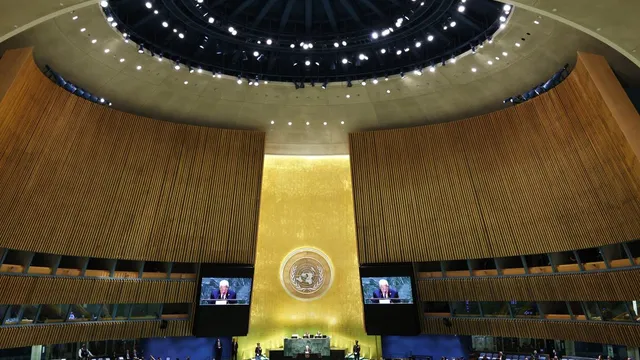
In recent months, the United States has taken significant steps regarding its relationship with the United Nations and France's role in international affairs. The Trump administration decided to terminate the United Nations Interim Force in Lebanon (UNIFIL), which had been in operation for nearly 50 years. This decision came amid growing frustrations with France's actions in Lebanon and its attempts to maintain an international presence in the region, even after UNIFIL's departure scheduled for December. The U.S. administration's stance reflects a broader critique of the UN's effectiveness and accountability, particularly in relation to American interests.
France's involvement in Lebanon has been contentious, with accusations of exacerbating the situation rather than alleviating it. President Emmanuel Macron's government has faced criticism for delaying cease-fire agreements, which resulted in additional suffering for hostages. The French government still perceives itself as having a special role in Lebanon, a former colony, despite the challenges and failures associated with its involvement. This has led to tensions between the U.S. and France, particularly as the U.S. reassesses its alliances and commitments within the UN framework.
The reappointment of Volker Turk as UN High Commissioner for Human Rights has further fueled discontent among U.S. officials. Turk has been criticized for his perceived bias against the U.S. while being lenient towards countries like Iran. His leadership has transformed the Human Rights Council into a platform that is often seen as anti-Israel, raising questions about the UN's commitment to genuine reform. The U.S. administration's decision to terminate UNIFIL can be viewed as a response to these ongoing frustrations with the UN's structure and its member states' actions.
The situation highlights the complexities of international diplomacy and the shifting dynamics between traditional allies. The U.S. has expressed a desire to distance itself from organizations that it believes undermine its foreign policy objectives. As the Trump administration continues to navigate these challenges, the future of U.S.-France relations and the role of the UN in global governance remain uncertain. The decision to end UNIFIL marks a significant moment in this ongoing reevaluation of international partnerships and the effectiveness of multilateral organizations.