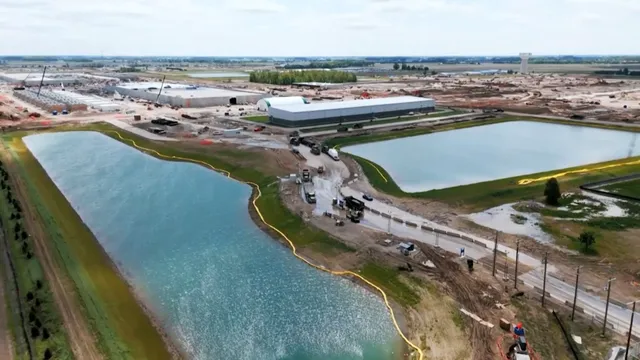
In the United States, particularly in Janesville, Wisconsin, the construction of data centers has sparked significant local debates regarding their economic impact. George Cullen, a local business leader, noted that the community has managed to replace jobs lost after the closure of the General Motors plant, indicating a positive shift in local employment. However, the introduction of data centers has raised concerns among residents about their long-term benefits and potential risks. Garrik Harwick from IBEW Local 890 expressed optimism about the potential for industry growth and increased tax revenue, while others remain skeptical about the actual economic benefits.
The debate surrounding data centers is not unique to Janesville; it reflects a broader national trend where communities are grappling with the implications of such developments. A report by Data Center Watch highlighted that in just the first quarter of the year, at least 75 data center projects worth $130 billion were delayed or blocked across the country. This indicates a growing resistance to data centers, fueled by concerns over environmental impact, economic volatility, and the adequacy of promised benefits.
Prescott Balch, a former bank executive, has voiced his concerns about the sustainability of the economic benefits associated with data centers. He argues that the industry is highly volatile and subject to rapid changes, which could leave local residents to bear the financial burden if the expected revenue does not materialize. Balch emphasizes the need for civic leaders to engage with the community and ensure that there is a consensus on the development of such impactful projects.
As the construction boom driven by artificial intelligence continues, communities like Janesville must navigate the complex landscape of economic development, weighing the potential benefits against the risks and uncertainties that accompany data centers. The ongoing discussions reflect a critical moment for local governance and community engagement in shaping the future of their economies.