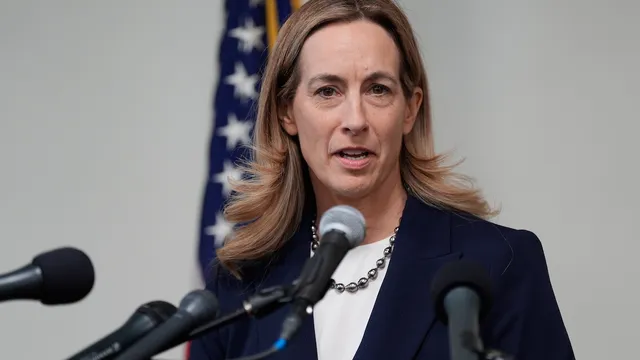
Governor Sherrill removes nearly 400 noncitizens from New Jersey voter rolls
politics
controversial
informative

Governor Sherrill removes nearly 400 noncitizens from New Jersey voter rolls

60
(Update: )
state of the United States of America
  • A software error in New Jersey's Motor Vehicle Commission system led to the registration of 6,600 individuals who indicated they were noncitizens.
  • Governor Mikie Sherrill ordered the removal of these individuals from the voter rolls and initiated an investigation into the error.
  • The incident raises concerns about election integrity and the potential for noncitizen voting in the state.
Share opinion
6

Story

In New Jersey, a significant software error in the Motor Vehicle Commission system led to the wrongful registration of approximately 6,600 individuals who indicated they were not U.S. citizens while applying for driver's licenses and state IDs. This issue arose between June 2023 and June 2024, during the previous administration of Governor Phil Murphy. Upon discovering the error, current Governor Mikie Sherrill, who took office in 2026, expressed her dismay and took immediate action to rectify the situation. She ordered an investigation into the circumstances surrounding the error and the removal of the erroneously registered individuals from the voter rolls. The preliminary analysis revealed that fewer than 400 of those registered due to the software glitch actually cast ballots in the 2024 election. These individuals were registered across various political affiliations, including Democrats, Republicans, and unaffiliated voters, and were located throughout the state. Governor Sherrill emphasized the importance of election integrity and transparency, condemning the failures that allowed this situation to occur. She also replaced the vendor responsible for the software system to prevent future occurrences. The incident has sparked a broader discussion about election security and the potential for noncitizen voting in the United States. Critics, including Secretary of Homeland Security Markwayne Mullin, have raised concerns that the number of noncitizens registered to vote in New Jersey could be much higher than the reported figures. Mullin suggested that there could be as many as 35,152 potential noncitizens on the voter rolls, highlighting the need for stricter verification processes. As the political landscape continues to evolve, the issue of noncitizen voting remains a contentious topic. Governor Sherrill's actions reflect a commitment to addressing the problem and ensuring that the integrity of the electoral process is upheld. The situation has drawn attention from both sides of the political spectrum, with some calling for more stringent voter ID laws and others advocating for the protection of voting rights. The ongoing investigation and the measures taken by the Sherrill administration will likely shape the future of voter registration and election security in New Jersey.

Context

The history of voter registration errors in the United States is a complex narrative that reflects the evolving landscape of electoral participation and the challenges associated with ensuring accurate voter rolls. Voter registration has been a critical component of the democratic process, enabling citizens to exercise their right to vote. However, throughout history, various factors have contributed to errors in voter registration, including administrative inefficiencies, technological limitations, and systemic issues such as discrimination and disenfranchisement. These errors can lead to significant consequences, including eligible voters being turned away at the polls, disenfranchisement of marginalized communities, and overall distrust in the electoral process. One of the earliest instances of voter registration errors can be traced back to the post-Civil War era, when the Reconstruction Amendments aimed to expand voting rights to formerly enslaved individuals. Despite these legal advancements, many states implemented discriminatory practices that created barriers to registration, such as literacy tests and poll taxes. These practices not only resulted in widespread errors in voter registration but also systematically disenfranchised African American voters and other minority groups. The Voting Rights Act of 1965 was a pivotal moment in addressing these issues, as it aimed to eliminate discriminatory practices and ensure fair access to voter registration. In the modern era, technological advancements have transformed the voter registration process, but they have also introduced new challenges. The shift to online registration and the use of automated systems have streamlined the process, yet they have also led to new types of errors, such as data entry mistakes and issues with database management. Additionally, the increasing prevalence of voter roll purges—where states remove individuals from voter registration lists—has raised concerns about the accuracy of these lists and the potential for eligible voters to be incorrectly removed. These purges are often justified by claims of preventing voter fraud, but they can disproportionately affect low-income individuals and communities of color, exacerbating existing disparities in voter participation. Efforts to improve the accuracy of voter registration continue to evolve, with various states implementing measures such as same-day registration, automatic voter registration, and enhanced training for election officials. Advocacy groups also play a crucial role in raising awareness about voter registration errors and pushing for reforms that promote transparency and accessibility. As the United States approaches future elections, it is imperative to address the historical and ongoing challenges associated with voter registration errors to ensure that all citizens have the opportunity to participate in the democratic process without barriers.