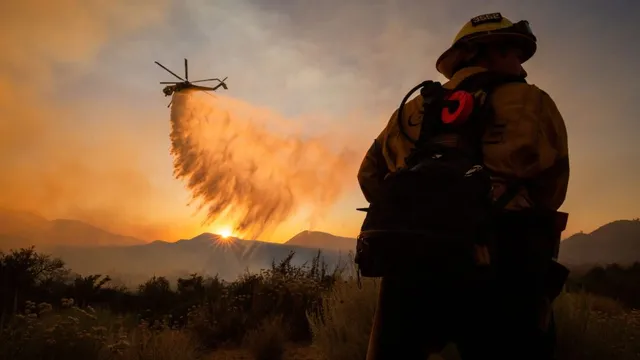
In recent months, wildfires have become increasingly severe in North America and Europe, with land burned in Canada and the United States exceeding the 10-year average by at least 25%. This alarming trend is occurring despite a global decline in fire activity, particularly in Africa and Asia, where human demographic changes have led to reduced savanna fires. Experts attribute the worsening fire conditions in North America and Europe to climate change, which has extended the burning season and increased the intensity and frequency of wildfires. As a result, valuable properties are at greater risk, and the overall impact of these fires is becoming more pronounced.
The situation is further complicated by the developing super strong El Nino, which is expected to exacerbate fire activity in various regions, including the Amazon and Southeast Asia. While El Nino may bring more rain to the U.S. West, it can also lead to increased grass growth in deserts, providing additional fuel for future grass fires. This duality highlights the unpredictable nature of fire activity and the challenges posed by climate change.
Experts like John Abatzaglou emphasize that human actions, such as land use changes for housing and farming, are significantly influencing fire trends. In sub-Saharan Africa, fire activity has decreased dramatically over the past 25 years, which has contributed to the overall decline in global fire emissions. However, the opposite is true for North America and Europe, where human fingerprints are evident in the increasing severity of wildfires.
As the climate continues to change, the question is not if landscapes will burn, but when they will burn. The urgency of addressing these issues is underscored by the growing frequency and intensity of wildfires, which pose significant threats to public health, property, and ecosystems. The need for proactive measures to mitigate the impact of climate change on fire activity has never been more critical.