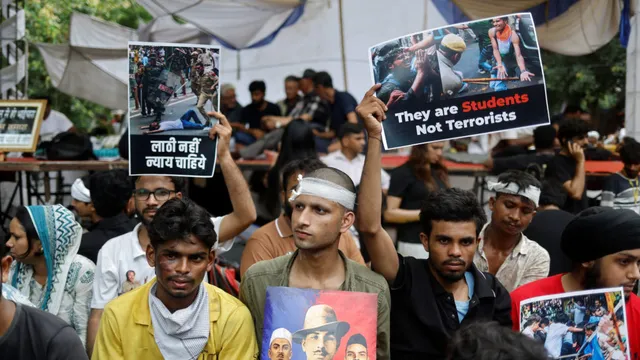
In India, a significant protest movement has emerged, led by youth demanding educational reforms and accountability from the government. The Cockroach movement, which began as a satirical response to a Supreme Court judge's derogatory remarks about youth, has gained traction and now includes a diverse group of supporters, including professionals and families. On July 20, 2026, thousands marched towards Parliament in New Delhi, but their efforts were met with a violent police response, including the use of tear gas and batons. This confrontation has sparked widespread outrage and sympathy for the protesters across the nation.
The movement's founder, Abhijeet Dipke, emphasized their determination to continue the protest until their demands are met, particularly the resignation of Education Minister Dharmendra Pradhan, who is criticized for his handling of India's examination system. The protests have drawn attention to the government's approach to dissent, with opposition leader Rahul Gandhi and other lawmakers showing solidarity by staging a sit-in outside Prime Minister Narendra Modi's residence. However, police forcibly removed them, escalating tensions further.
The protests have also highlighted the emotional toll of the examination system, with families of students who have died by suicide due to alleged exam irregularities calling for compensation and reforms. Prominent activist Sonam Wangchuk's hunger strike has become a symbol of the movement, galvanizing support and drawing attention to the issues at hand. Despite the government's initial outreach to engage with protesters, the lack of concrete action has only intensified their resolve.
As the situation unfolds, the Cockroach movement continues to challenge the government's authority and its methods of suppressing peaceful dissent. The police's violent response has raised concerns among human rights organizations, which argue that the right to peaceful assembly is enshrined in the Indian constitution. The movement's growth and the public's reaction to the police's actions suggest a significant shift in the political landscape, as more citizens join the call for justice and accountability in the education sector.