Angel S. Rampersad dies in military conflict in Jordan
military conflicts
tragic
controversial

Angel S. Rampersad dies in military conflict in Jordan

11
(Update: )
country in Western Asia
  • Staff Sgt. Angel S. Rampersad was killed in an attack on July 17, 2026, in Jordan.
  • She was posthumously promoted and recognized for her military service and community involvement.
  • Her death has deeply affected her community, highlighting the sacrifices of service members.
Share opinion
1

Story

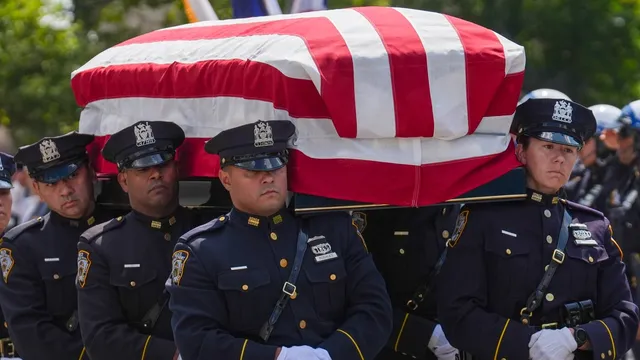
In the United States, specifically in Ozone Park, Queens, the community mourned the loss of Staff Sgt. Angel S. Rampersad, who was killed on July 17, 2026, during an attack on the Muwaffaq Salti Air Base in Jordan. The news of her death was delivered to her friend Carol Acevedo by two military personnel, leading to an emotional response from the community. Rampersad, 28, had always aspired to serve in the military, enlisting at a young age and earning several awards over her seven-year career, including the Army Commendation Medal. Her family and friends remembered her as a dedicated service member and a beloved community member. Rampersad was not born in the United States but chose to fight for her adopted country. She was posthumously promoted to staff sergeant and was recognized for her contributions to military communication systems, a role she took on after advice from a family friend. Her commitment to her duties and her community was evident, as she was also involved in local church activities and sports during her youth. The community came together to honor her memory, lighting candles and holding vigils in her honor. At her funeral, attended by family, friends, and community members, emotional tributes highlighted her dedication and the impact she had on those around her. Carol Acevedo expressed her pride in Rampersad's service, emphasizing her focus and commitment to her military role. The loss of Rampersad resonated deeply within the diverse community of Ozone Park, where she was remembered not only for her military service but also for her strong ties to the local area. The circumstances surrounding Rampersad's death reflect the ongoing conflicts involving U.S. military personnel abroad, particularly in the Middle East. Her story serves as a poignant reminder of the sacrifices made by service members and the profound effects of military actions on families and communities back home. As the nation reflects on her service, the community of Ozone Park continues to honor her legacy, ensuring that her contributions and the ultimate sacrifice she made for her country are not forgotten.

Context

The history of U.S. military involvement in Jordan is marked by a strategic partnership that has evolved over several decades, primarily driven by regional stability and security concerns. Following Jordan's independence in 1946, the United States began to establish a relationship with the Hashemite Kingdom, which was further solidified during the Cold War. The U.S. viewed Jordan as a crucial ally in the Middle East, particularly in countering Soviet influence and maintaining stability in a region characterized by conflict and political upheaval. This partnership was formalized through military aid and training programs, which have been instrumental in enhancing the capabilities of the Jordanian Armed Forces. Throughout the late 20th century, U.S. military involvement in Jordan intensified, particularly during the Gulf War in 1990-1991, when Jordan's strategic location became vital for coalition forces. The U.S. provided logistical support and military assistance to Jordan, which allowed the country to play a significant role in the coalition against Iraq. In the aftermath of the Gulf War, the U.S. continued to strengthen its military ties with Jordan, providing substantial financial aid and military equipment, which has helped Jordan maintain a capable military force amidst regional tensions. In the 21st century, the U.S. military presence in Jordan has been further underscored by the events of the Arab Spring and the rise of extremist groups in the region. The Syrian Civil War, which began in 2011, has had a profound impact on Jordan, leading to an influx of refugees and increased security challenges. In response, the U.S. has expanded its military cooperation with Jordan, including joint training exercises and intelligence sharing. The establishment of the Jordanian Special Operations Forces has been a key focus of U.S. military assistance, aimed at enhancing Jordan's counterterrorism capabilities and ensuring the security of its borders. As of 2026, the U.S. continues to view Jordan as a critical partner in promoting stability in the Middle East. The ongoing military collaboration includes not only traditional military aid but also support for humanitarian efforts in response to the refugee crisis. The U.S. has recognized Jordan's role as a moderating force in the region, and this partnership is expected to evolve further as new challenges arise. The historical context of U.S. military involvement in Jordan reflects a commitment to a stable and secure Middle East, with Jordan serving as a pivotal ally in achieving these objectives.