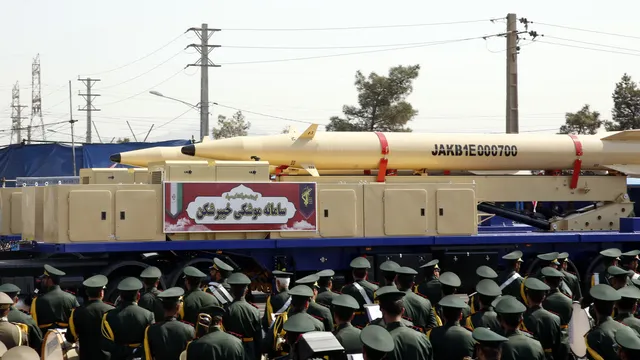
In July 2026, Iran intensified its military operations by launching missile attacks on U.S. bases in at least five countries across the Middle East. This escalation followed a fragile ceasefire that had been brokered in June, which was already under strain. The Kheibar Shekan ballistic missiles, which are fired from mobile ground launchers, have been adapted by Iran to target these bases effectively. U.S. officials reported that the missiles have been altered in terms of flight paths and speeds to breach American air defenses, leading to a series of strikes that resulted in the deaths of several U.S. service members.
The Kheibar Shekan missile system is notable for its use of solid fuel, which allows for quicker launch times and reduces the vulnerability of launch sites to counterattacks. This missile is named after the historical Battle of Khaybar, reflecting its significance in Iranian military strategy. Analysts have pointed out that the Kheibar Shekan is cost-effective compared to the high-end interceptors used by the U.S. and its allies, which can be prohibitively expensive. This economic advantage allows Iran to sustain its missile operations over time, posing a long-term challenge for U.S. defense systems.
The recent attacks have not only tested the U.S. military's response capabilities but have also raised concerns about the evolving nature of warfare in the region. Reports indicate that Iran has integrated these missiles with jet-powered drones, showcasing a tactical evolution that complicates interception efforts. U.S. and allied forces have managed to intercept many of the missiles, but some have successfully bypassed defense systems, highlighting the ongoing threat posed by Iran's missile capabilities.
Additionally, there are allegations that Russia has been providing intelligence to Iran regarding U.S. military positions in the Gulf, further complicating the geopolitical landscape. Ukrainian President Volodymyr Zelensky claimed that Russian satellites have been conducting reconnaissance on U.S. bases, sharing this information with Iran. This collaboration between Iran and Russia underscores the interconnected nature of regional conflicts and the potential for broader implications in international relations as tensions continue to escalate.