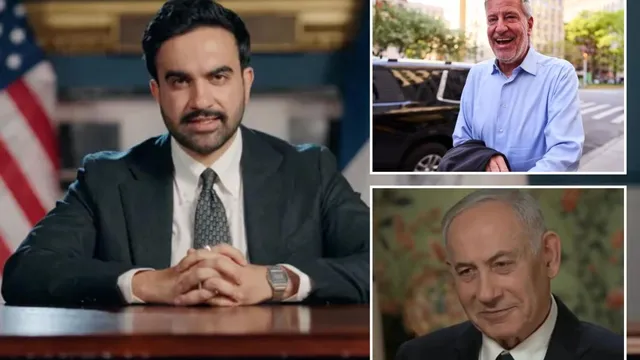
In the context of the ongoing conflict in Gaza, former New York City Mayor Bill de Blasio recently supported current Mayor Zohran Mamdani's assertion that Israeli Prime Minister Benjamin Netanyahu is a war criminal. This statement was made in light of the significant civilian casualties reported in Gaza following the events of October 7, 2023. A national survey indicated that a majority of Americans, approximately 54.6%, viewed Israel's military response as genocide, reflecting a shift in public perception regarding the standards of warfare. The discourse surrounding this issue raises critical questions about the implications of labeling actions in war as genocide based solely on civilian casualties.
The debate over the definition of genocide and war crimes has intensified, with many arguing that the traditional legal standards are being undermined. Historical examples, such as the bombings of German cities during World War II and the escalation of the Vietnam War, illustrate the complexity of evaluating military actions. Critics of the current narrative contend that equating high civilian death tolls with genocide dilutes the meaning of the term and could have far-reaching consequences for global justice. The distinction between unintended civilian casualties and deliberate war crimes is crucial in this discussion.
As public sentiment shifts towards viewing humanitarian tragedies through the lens of genocide, the potential for mislabeling conflicts increases. This trend not only affects perceptions of Israel's actions but also poses a risk to the integrity of international law. The consequences of such labeling could lead to a situation where the term 'genocide' loses its significance, making it challenging to address actual instances of this crime. The ongoing conflict in Gaza serves as a critical case study in understanding the implications of these evolving definitions and the responsibilities of leaders in framing their responses.
Ultimately, the conversation surrounding the conflict in Gaza and the labeling of actions as genocide or war crimes highlights the need for a nuanced understanding of warfare. It calls for a careful examination of intent, context, and the legal frameworks that govern military conduct. As the discourse continues, it is essential to maintain clarity in the definitions of humanitarian tragedy and genocide to preserve the principles of global justice.