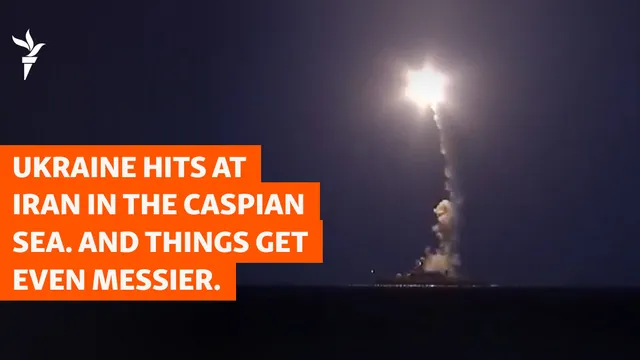
In the Caspian Sea, Ukrainian forces targeted Iranian cargo ships believed to be transporting military goods to Russia. This incident occurred over the past weekend and has drawn significant attention from both Iran and Russia. The Ukrainian domestic intelligence agency, the SBU, reported that drones successfully hit a Russian missile boat named Molnyia and two Russian-flagged cargo ships, Port Olya 2 and Begey, which were under international sanctions. These ships were allegedly involved in the transportation of military supplies between Iran and Russia, raising concerns about the ongoing military cooperation between the two nations.
Experts have weighed in on the implications of these strikes. Nicole Grajewski, a Russia-Iran expert, noted that continued Ukrainian attacks could complicate matters for both Iran and Russia. Saeid Golkar, an expert on Iran's military, emphasized that while Tehran is angry about the strikes, it has limited military capabilities to retaliate against Ukraine. Nate Swanson, a former Iran director at the White House National Security Council, echoed this sentiment, stating that Iran's threats are more bluster than actionable power in this context.
The situation is further complicated by Israel's involvement in the region, as it has conducted its own operations against Iranian targets in the Caspian Sea. On March 18, Israeli jets attacked the port of Bandar Anzali, sinking several naval ships. This highlights the broader geopolitical tensions in the area, where multiple nations are vying for influence and control over military resources.
Ukrainian President Volodymyr Zelenskyy was scheduled to meet with President Donald Trump on July 28, 2026, to discuss these developments. Zelenskyy is expected to frame the Ukrainian strikes as a crucial part of the U.S. campaign against Iran, which could complicate U.S. foreign policy. Grajewski pointed out that the intertwining of the conflicts in Ukraine and Iran may pose challenges for Washington, as it seeks to navigate its strategic interests without directly involving itself in the Iranian conflict. The situation remains fluid, with potential repercussions for international relations and military strategies in the region.