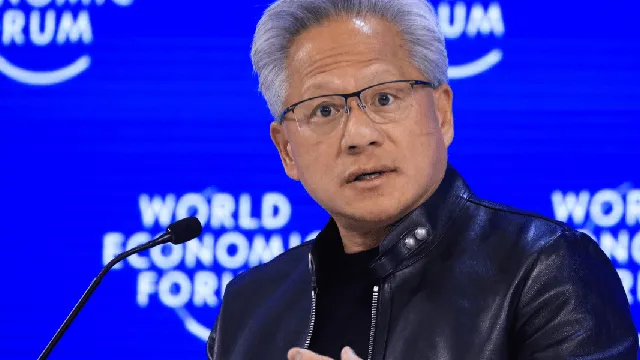
In January 2026, at the World Economic Forum in Davos, Switzerland, Jensen Huang, the CEO of Nvidia, discussed the future of job opportunities in the context of artificial intelligence and infrastructure development. He emphasized that the next wave of high-paying jobs would not be in traditional white-collar sectors but rather in skilled trades such as plumbing, electrical work, and construction. Huang highlighted the significant investment in data centers, which is projected to reach $7 trillion globally by the end of the decade, leading to what he termed the largest infrastructure build-out in human history.
Huang's remarks came amid a growing concern about the shortage of skilled labor in these trades. He noted that many of these roles offer salaries exceeding $100,000 and do not require a college degree, making them accessible to a broader range of individuals. A report from McKinsey projected a need for an additional 130,000 trained electricians, 240,000 construction laborers, and 150,000 construction supervisors in the U.S. alone by 2030. Huang expressed optimism that everyone should have the opportunity to earn a good living without necessarily pursuing a PhD in computer science.
However, Huang's positive outlook contrasts sharply with warnings from other industry leaders, such as Ford CEO Jim Farley, who cautioned that AI is eroding traditional white-collar job opportunities. Farley pointed out that hiring for entry-level positions in tech companies has decreased by 50% since 2019, raising questions about the direction of the education system, which continues to prioritize four-year college degrees. He argued that while there is a push for a manufacturing and infrastructure revival, the U.S. lacks the necessary blue-collar workforce to support this growth.
In June 2025, Farley highlighted a significant shortfall in factory and construction workers, estimating a shortage of 600,000 factory workers and 500,000 construction workers. Larry Fink, CEO of BlackRock, echoed these concerns, particularly regarding the electrical industry, which he identified as a potential bottleneck in the development of AI data centers. Fink warned that the country is at risk of running out of electricians needed for this infrastructure expansion, emphasizing the urgent need for skilled labor in the face of rapid technological advancement.