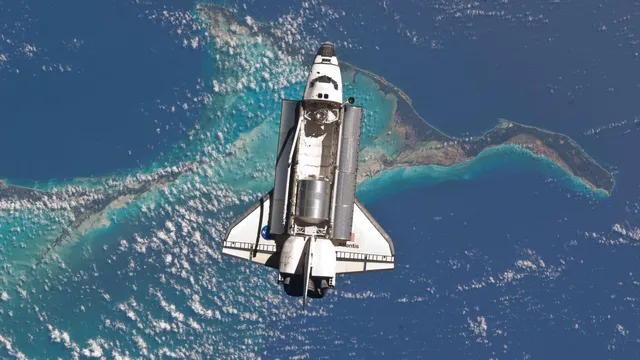
NASA's Space Shuttle Program, which operated from 1981 to 2011, was a significant achievement in human spaceflight. The program included five iconic spacecraft: Columbia, Challenger, Discovery, Atlantis, and Endeavour. Collectively, these shuttles completed 135 missions, accumulating over 32,000 hours in space. They played a crucial role in constructing the International Space Station (ISS) and transporting astronauts to and from the station. The last shuttle to fly was Atlantis, which launched on July 8, 2011, and returned to Earth on July 21, 2011. This mission marked the end of an era for NASA's human spaceflight capabilities.
During its operational years, the Space Shuttle Program achieved numerous milestones, including the deployment and servicing of the Hubble Space Telescope, and visits to Russia's Mir space station. The shuttles orbited Earth 4,848 times, traveling nearly 126 million miles, which is more than 525 times the distance between Earth and the moon. The program was celebrated for its ability to provide unique views of Earth from space, with astronaut photographs capturing distinct locations framed by the human eye.
Despite its successes, the program faced significant tragedies, including the Challenger disaster in 1986 and the Columbia disaster in 2003, both of which resulted in the loss of all crew members on board. These incidents highlighted the risks associated with human spaceflight and led to increased scrutiny of NASA's safety protocols. Ultimately, the program was canceled in 2011 due to the high costs of maintaining aging spacecraft and a reduced need for the shuttles following the completion of the ISS.
Today, the legacy of the Space Shuttle Program continues to influence space exploration. The shuttles remain the only winged spacecraft to have carried humans into space, and their contributions to science and technology are still recognized. The Atlantis shuttle is now on display at the Kennedy Space Center Visitor Complex, serving as a reminder of the program's achievements and the importance of human space exploration.