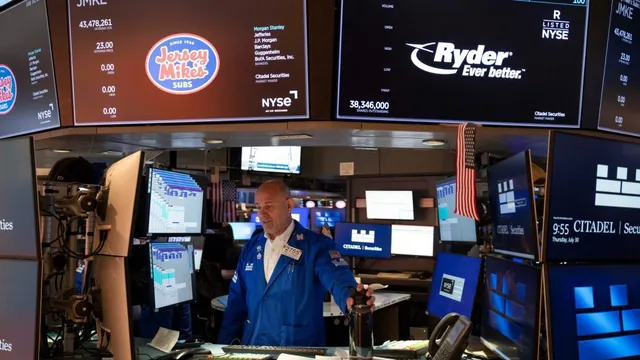
In July 2026, the U.S. stock market experienced significant fluctuations, with the S&P 500 index showing a slight loss despite a 0.7% increase on the last trading day of the month. The volatility was largely attributed to rising oil prices due to the ongoing war with Iran and concerns regarding the profitability of major tech companies' investments in artificial intelligence. Amazon reported a tripling of its profits compared to the previous year, driven by accelerated growth in its cloud computing sector. This positive news led to an increase in Amazon's investment forecast for the year, suggesting that its AI initiatives are beginning to yield results.
On the other hand, Apple faced challenges as supply chain issues raised concerns among investors, contributing to its stock decline. The mixed performance of tech stocks reflected broader market anxieties about inflation and the Federal Reserve's monetary policy. The yield on the 10-year Treasury bond rose, indicating investor concerns about inflation and potential interest rate hikes by the Fed. The Fed's chairman, Kevin Warsh, reiterated the commitment to reducing inflation to 2% but did not provide specific strategies, leading to skepticism about the Fed's credibility.
In a remarkable development, Seoul's Kospi index surged by 17.9%, marking its best day ever, largely driven by significant gains in major tech companies like Samsung Electronics and SK Hynix. Both companies saw their stocks rise by at least 26.8%, reflecting investor optimism in the tech sector. This surge followed a strong performance in the first half of the year, where the Kospi index more than doubled. The contrasting performances of the U.S. and South Korean markets highlight the varying investor sentiments and economic conditions in different regions.
Overall, the month of July was characterized by a mix of optimism and caution in the stock markets, with tech companies at the forefront of investor attention. The developments in both the U.S. and South Korea underscore the ongoing impact of geopolitical tensions, inflation concerns, and the evolving landscape of technology investments on market performance.