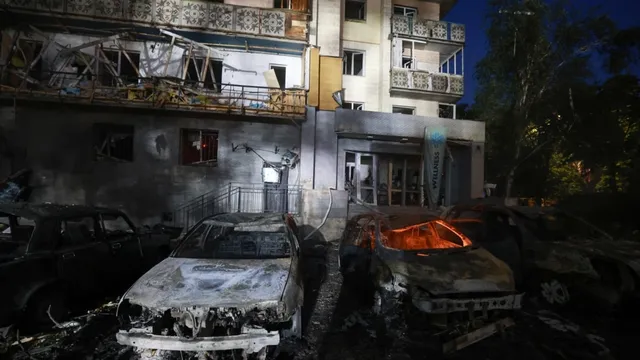
On July 19, 2026, Russia executed a significant ballistic missile assault on Kyiv, Ukraine, marking one of the largest attacks since the onset of its full-scale invasion in February 2022. Ukrainian President Volodymyr Zelenskyy reported that the attack resulted in one fatality and 16 injuries, with over 40 missiles and 120 drones targeting the capital. Ukrainian air defenses managed to intercept a substantial number of these threats, but many still struck various locations, causing damage to civilian infrastructure, including apartment buildings and commercial centers.
The Ukrainian military indicated that the barrage included a variety of missile types, such as Iskander-M, S-400, and Zircon hypersonic missiles, alongside numerous drones. The strikes affected six districts within Kyiv, leading to emergency responses from nearly 600 first responders. Additionally, damage was reported in the Odesa region, highlighting the widespread impact of the Russian offensive across Ukraine.
In response to the missile attacks, Ukraine's General Staff announced successful strikes on two Russian oil tankers in the Black Sea, which were allegedly supporting Russian military operations. This action followed a previous large-scale Ukrainian drone attack targeting logistics centers in Russia, indicating a continued escalation in hostilities between the two nations. Ukrainian officials emphasized the need for increased international pressure on Russia to halt its aggressive actions.
The Russian Defense Ministry claimed that the missile strikes were aimed at military infrastructure, including logistics centers and facilities related to missile and drone production. However, these assertions remain unverified. The ongoing conflict has seen a significant increase in military engagements, with both sides intensifying their operations in a bid to gain strategic advantages. The situation remains critical as Ukraine continues to defend its sovereignty against Russian aggression.