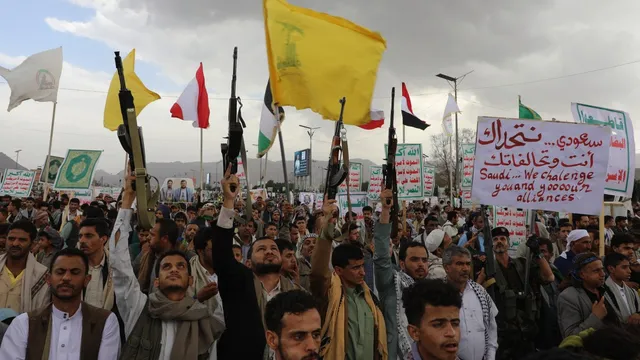
Saudi Arabia is currently grappling with significant security challenges stemming from the ongoing U.S.-Israeli conflict against Iran, which has intensified since October 2023. The Islamic Republic has launched missiles and drones targeting the Arabian Peninsula, where Saudi Arabia is located, alongside other Gulf Cooperation Council (GCC) states that host U.S. military bases. This escalation has been compounded by cross-border missile strikes from the Iran-aligned Ansar Allah group in Yemen, which accuses Riyadh of blockading Yemen and attacking its capital, Sanaa. The situation has raised alarms not only for Saudi Arabia's security but also for its ambitious Vision 2030 initiative aimed at diversifying the economy away from oil dependency.
The security landscape in the region has been further complicated by the involvement of the Islamic Resistance in Iraq, a coalition of militias that has engaged in missile attacks against Saudi Arabia. In response, the U.S. and Saudi forces have conducted joint airstrikes, marking a significant escalation in military engagement. Abdullah bin Farah al-Shaya, a retired Saudi brigadier general, emphasized that the security challenges facing the Kingdom are deeply rooted in decades of regional instability, which has created vacuums exploited by armed groups. He noted that Saudi Arabia's approach to these threats involves a combination of military force and diplomatic efforts to foster peace and stability.
The conflict in Yemen, which began in 2015, has also played a crucial role in shaping Saudi Arabia's current predicament. Initially, the Saudi-led coalition aimed to restore the internationally recognized government ousted by the Houthi rebels. However, the complexity of the conflict, characterized by guerrilla warfare and the Houthis' advanced weaponry, has made a swift military victory elusive. Al-Shaya pointed out that the nature of the Houthi threat, bolstered by Iranian support, has entrenched the group within Yemen, complicating Saudi Arabia's military objectives.
Additionally, Saudi Arabia's relationship with the United Arab Emirates (UAE) has come under scrutiny due to the UAE's growing alignment with Israel and its involvement in various foreign conflicts. Despite these tensions, both nations have reaffirmed their partnership, although differences remain, particularly regarding military coalitions. The current situation poses a severe test for Saudi Arabia, as it navigates multiple fronts of conflict while striving to achieve its Vision 2030 goals, which aim to position the Kingdom as a global hub for investment and innovation.