Ukrainian photographer captures devastating drone strike in Kramatorsk
military conflicts
tragic
impactful

Ukrainian photographer captures devastating drone strike in Kramatorsk

11
(Update: )
sovereign state in Eastern Europe and Northern Asia
city in Kramatorsk Raion, Donetsk Oblast in eastern Ukraine
East Slavic language
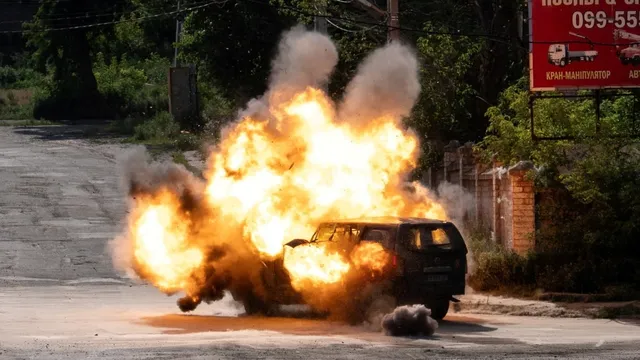
  • On July 15, 2026, a Russian FPV drone struck a vehicle in Kramatorsk, Ukraine.
  • The driver of the vehicle escaped just before the explosion, which caused significant damage.
  • The incident highlights the increasing use of drone warfare and its impact on civilian safety.
Share opinion
1

Story

On July 15, 2026, in Kramatorsk, Ukraine, a Russian first-person view (FPV) drone struck a vehicle, highlighting the increasing use of drone warfare in the ongoing conflict. Ukrainian military photographer Iryna Rybakova and her colleague Maks Bondarenko witnessed the incident while driving through the suburbs. They observed a large FPV quadcopter equipped with an explosive warhead searching for targets. As they pulled over to take action, the drone targeted a blue SUV that had just entered the intersection. The driver, a Ukrainian serviceman, managed to escape just before the drone exploded, resulting in significant damage to the vehicle but no injuries to civilians. Rybakova's photograph captured the moment of the explosion, showcasing the destructive power of the drone's warhead. The incident is part of a troubling trend, as Russian drone teams have reportedly intensified their FPV drone attacks on Kramatorsk since early July. The city, located 20 kilometers from the front lines of the conflict, has become a target for these unjammable drones, which can fly long distances to strike unsuspecting targets. The use of drones in warfare has evolved, with tactics including the deployment of stationary drones that conserve battery power until dawn, allowing them to observe and attack targets with little warning. This method has proven deadly, as evidenced by previous attacks that resulted in civilian casualties, including the death of a 28-year-old woman on July 8 and two elderly men on July 17. The driver of the SUV, who had just left a combat position, expressed his disappointment over the damage to his vehicle, which he had recently spent $2,000 repairing. Rybakova and Bondarenko provided him with photos and videos of the incident to assist him in crowdfunding for a new car. The increasing frequency of drone attacks in Kramatorsk raises concerns about the safety of civilians and the evolving nature of warfare in the region. As the conflict continues, the psychological impact of such attacks on the local population cannot be underestimated, as fear and uncertainty grow in areas frequently targeted by drone strikes. In summary, the incident on July 15 serves as a stark reminder of the dangers posed by modern warfare technologies, particularly in urban environments where civilians are at risk. The dramatic image captured by Rybakova not only documents the event but also underscores the urgent need for international attention to the humanitarian implications of drone warfare in Ukraine.

Context

The history of drone usage in military conflicts has evolved significantly over the past few decades, transforming the landscape of modern warfare. Initially, drones were developed for reconnaissance purposes, allowing military forces to gather intelligence without risking human lives. The first notable use of drones in military operations can be traced back to the Vietnam War, where the U.S. deployed unmanned aerial vehicles (UAVs) for surveillance missions. However, it was not until the late 1990s and early 2000s that drones began to be integrated into combat operations, particularly with the advent of the Predator drone, which was capable of both surveillance and targeted strikes. This marked a pivotal shift in military strategy, as drones provided a means to engage targets with precision while minimizing collateral damage and reducing the risk to personnel. The post-9/11 era saw an exponential increase in the deployment of drones in military conflicts, particularly in Afghanistan and Iraq. The U.S. military utilized drones extensively for both intelligence gathering and targeted killings of high-value targets, including terrorist leaders. The ability to conduct strikes remotely allowed for a new form of warfare that emphasized speed and efficiency. The use of drones also raised ethical and legal questions regarding sovereignty, civilian casualties, and the implications of remote warfare. As drone technology advanced, so did the capabilities of these systems, with improvements in surveillance, targeting, and weaponry, leading to their widespread adoption by various military forces around the world. In recent years, the proliferation of drone technology has led to its adoption by non-state actors and insurgent groups, further complicating the dynamics of military conflicts. Groups such as ISIS and Hezbollah have employed drones for reconnaissance and offensive operations, demonstrating that drone warfare is no longer the exclusive domain of state militaries. This shift has prompted nations to develop counter-drone strategies to protect their forces and critical infrastructure from drone threats. The emergence of commercial drone technology has also contributed to this trend, as the accessibility of drones has made it easier for various actors to engage in asymmetric warfare. Looking ahead, the future of drone usage in military conflicts is likely to be shaped by ongoing advancements in technology, including artificial intelligence and autonomous systems. These developments may lead to the creation of fully autonomous drones capable of making decisions without human intervention, raising further ethical and operational challenges. As military forces continue to adapt to the changing nature of warfare, the role of drones will remain central to strategic planning and operational execution. The history of drone usage in military conflicts serves as a testament to the transformative impact of technology on warfare, highlighting both the advantages and challenges that come with this powerful tool.