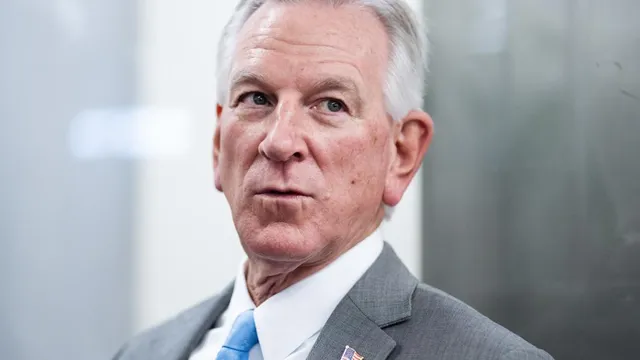
In recent comments, Senator Tommy Tuberville from Alabama expressed his concerns regarding New York City Mayor Zohran Mamdani's actions and statements. Tuberville claimed that Mamdani's behavior could eventually lead to him being sent to Guantanamo Bay, a facility known for housing detainees from the U.S. war on terror. Tuberville's remarks came during an interview with conservative commentator Benny Johnson, where he stated that Mamdani 'hates this country and wants to change it.' This assertion reflects a growing sentiment among some political figures who view Mamdani's actions as increasingly radical.
Mamdani has recently made headlines for his defiance against the federal government, particularly regarding his call for the Trump administration to rejoin the International Criminal Court (ICC) to enforce a warrant for Israeli Prime Minister Benjamin Netanyahu. Mamdani's statement that Netanyahu is 'not welcome in New York City' has raised eyebrows and sparked discussions about the implications of such a stance. His comments suggest a willingness to confront the federal government's position on international law and accountability for war crimes.
Glenn Beck, a conservative commentator, has also weighed in on Mamdani's actions, likening them to historical radical movements that ultimately failed to make a lasting impact. Beck warned that Mamdani's rhetoric could incite unrest in New York City, particularly with Netanyahu's upcoming visit. He drew parallels between Mamdani's current actions and those of past radical groups, suggesting that history may be repeating itself in a concerning manner.
The situation surrounding Mamdani highlights the tensions between local and federal authorities, especially regarding issues of international law and political dissent. As Mamdani continues to advocate for his views, the potential for conflict and unrest in New York City appears to be growing. The reactions from figures like Tuberville and Beck indicate a broader concern about the direction of political discourse and the implications of radical rhetoric in contemporary American society.