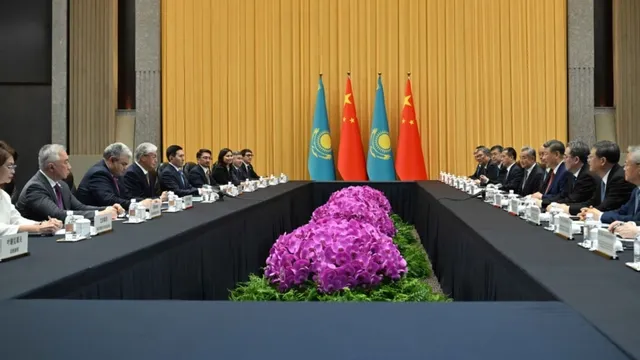
Kazakhstan has emerged as the first Central Asian nation to issue yuan-denominated debt, specifically through panda bonds, which are bonds issued by foreign entities in China's onshore market. This significant move was made by Samruk-Kazyna, Kazakhstan's sovereign wealth fund, which manages assets worth $88.6 billion as of the end of 2025. The issuance of 3 billion yuan, equivalent to approximately $443 million, was announced by Nurlan Zhakupov, the fund's chairman, marking Kazakhstan's inaugural entry into China's domestic financial market. This decision comes amid the economic uncertainties stemming from the ongoing Iran war, prompting Kazakhstan to seek more stable financial avenues.
The trend of issuing panda bonds is gaining traction among countries looking to diversify their funding sources, especially as traditional Western markets become increasingly volatile. Alicia Garcia-Herrero, chief economist for Asia-Pacific at Natixis, noted that this move aligns with Kazakhstan's broader strategy of engaging with Eurasian markets and reflects a trend towards 'de-dollarization.' However, this shift raises concerns in Western capitals regarding the balance of relations with China, as deeper financial ties could lead to increased Chinese influence over Kazakhstan's economic policies.
China stands to benefit from this trend as it seeks to internationalize the yuan and enhance its political leverage over neighboring countries. The issuance of panda bonds not only provides foreign governments with access to a more stable financial market but also ties their financial health to Chinese economic dynamics. This was evident when Russia, following a meeting between President Vladimir Putin and Chinese leader Xi Jinping, launched its own yuan-denominated sovereign bonds, indicating a growing reliance on Chinese currency amid Western sanctions.
Despite the apparent advantages of lower rates for yuan-denominated debt, analysts caution that the costs associated with credit enhancements and currency hedging can make panda bonds more expensive than domestic borrowing in local currencies. Pakistan has also entered the panda bond market, raising $250 million through its first issuance, highlighting a broader trend among countries seeking financial benefits while navigating the political implications of closer ties with China. As nations like Kazakhstan and Pakistan deepen their economic integration with China, they may face challenges related to political dissent and the influence of Chinese ideology on their domestic policies.