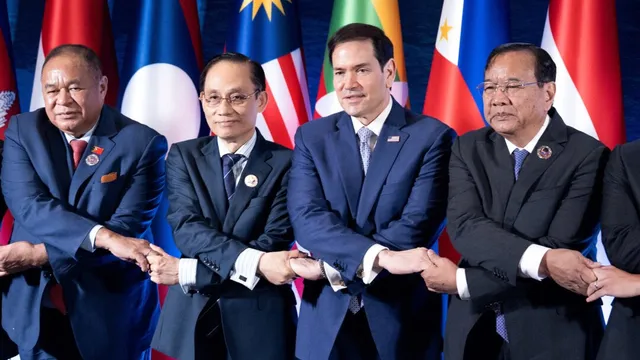
In the Philippines on July 22, 2026, U.S. Secretary of State Marco Rubio addressed foreign ministers from the Association of Southeast Asian Nations (ASEAN) amid rising tensions due to the ongoing conflict between the United States and Iran. He emphasized the importance of maintaining freedom of navigation through critical maritime routes, particularly the Strait of Hormuz and the Red Sea, which are vital for global energy supplies. Rubio expressed concern over Iran's attempts to control these waterways, warning that such actions could create a precedent for other nations to follow, potentially destabilizing regions like Southeast Asia where similar territorial disputes exist.
Rubio's remarks came in the context of heightened military activity in the region, including airstrikes against Iranian positions and threats from Iran-backed Houthi rebels to block shipping in the Red Sea. The Houthis' threats to impose a blockade on vessels from Saudi Arabia, a key U.S. ally, raised alarms about the potential impact on global oil markets. Rubio labeled Iran as the primary troublemaker in the Gulf region, asserting that their actions not only threaten U.S. interests but also those of its allies.
The situation has escalated since the U.S. and Iran resumed open conflict, with fears growing over the implications for energy supplies and global economic stability. Rubio reiterated the U.S. commitment to diplomacy but stressed that Iran's failure to keep its commitments undermines the possibility of a peaceful resolution. He indicated that the U.S. would take necessary actions to protect its interests and those of its allies if Iran continues its aggressive posturing.
The discussions at the ASEAN meeting also highlighted concerns about China's territorial claims in the South China Sea, drawing parallels between Iran's actions and China's assertiveness in the region. Rubio's comments reflect a broader strategy by the U.S. to strengthen alliances in Southeast Asia and deter potential aggression from both Iran and China, emphasizing the need for collective security measures to safeguard maritime trade routes critical to the global economy.