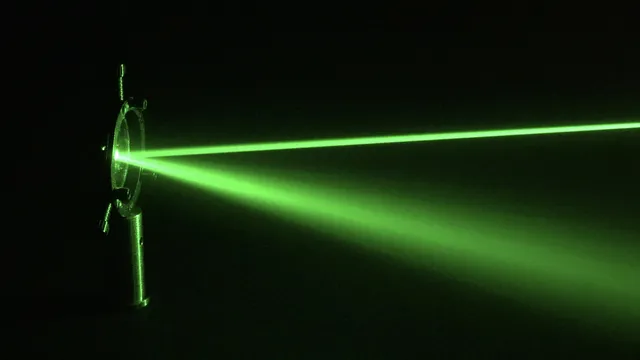
In a significant advancement in drone technology, researchers from the Civil Aviation University of China and Tsinghua University have developed a system that wirelessly charges drones using lasers. This breakthrough was detailed in a study published on July 29, 2026, in the journal Matter & Light. The scientists created a prototype that features a receiver similar to a solar cell, which is mounted on the drone's wing. This receiver, known as a perovskite laser cell-thermoelectric (PLC-TE) tandem device, efficiently converts laser light into electricity, achieving a conversion rate of 38.49%, surpassing previous records for perovskite-silicon tandem cells. However, initial tests revealed a significant challenge: the drone experienced extreme heating, reaching temperatures between 80 to 90 degrees Celsius, which could hinder its performance. The researchers acknowledged that managing this heat buildup is crucial for the system's efficiency and viability in real-world applications. Looking ahead, the team envisions a future where drones can operate for extended periods without the need for frequent battery replacements, particularly in fields such as reconnaissance, logistics, and disaster relief. They emphasized the need for further development of real-time tracking systems to ensure precise targeting of the PLC-TE on drones in flight. Future tests will involve assessing the device's performance on lightweight drones in outdoor conditions, potentially transforming the operational capabilities of unmanned aerial vehicles (UAVs).