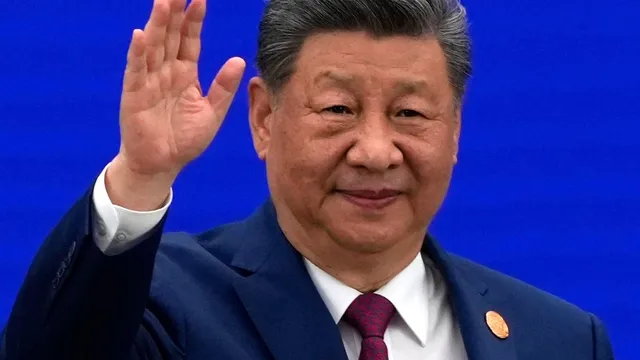
In Shanghai, China, during the annual World Artificial Intelligence Conference, President Xi Jinping emphasized the need for a collaborative global approach to artificial intelligence development. He criticized the United States for imposing restrictions that hinder China's access to advanced technologies, which has intensified the rivalry between the two nations. Xi stated that AI should not be a solo endeavor by any single country but rather a collective effort, urging nations to oppose the excessive application of national security concepts that prioritize one country's security over others. He announced plans to enhance AI cooperation with various international organizations and pledged to provide 5,000 AI training opportunities to developing countries over the next five years.
The conference, attended by leaders from Kazakhstan, Cambodia, Thailand, and U.N. Secretary-General António Guterres, showcased China's advancements in AI technology, including Huawei's Atlas 950 SuperPoD. Xi's remarks signal China's ambition to position itself as a reliable partner for developing nations, often referred to as the Global South. The Chinese government aims to expand its influence in AI by promoting open-source models that are more accessible and affordable compared to their U.S. counterparts. This strategy aligns with China's five-year plan, which prioritizes advancements in science and technology, including AI.
China's efforts to build its own technological capabilities have been spurred by American-led restrictions that have limited its access to cutting-edge technologies. Xi's call for a 'symphony of global cooperation' in AI development reflects a broader strategy to counteract U.S. dominance in the field. The establishment of an intergovernmental organization focused on global AI governance further illustrates China's commitment to fostering international collaboration. Xi's speech also serves as a reminder of the ongoing tensions between the U.S. and China regarding technology and security, as both nations navigate the complexities of AI governance.
As the AI landscape continues to evolve, China's focus on self-reliance and innovation positions it as a formidable player in the global technology arena. The emphasis on collaboration with developing countries highlights China's intention to lead in AI while addressing the needs of nations that may not have the same technological resources. The outcomes of these initiatives will likely shape the future of AI development and governance on a global scale, as countries grapple with the implications of AI technology for security, economy, and society.