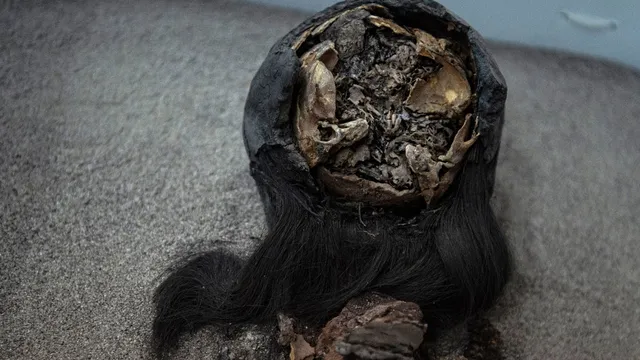
In a groundbreaking study, researchers have analyzed ancient DNA from mummies found in Chile, revealing significant insights into the spread of smallpox in the Americas. The study focused on 13 bone samples collected from an archaeological site at Camarones, northern Chile, where evidence of smallpox infections was discovered in the leg bones of an adult man and woman. These individuals likely died between 1492 and 1631, a period coinciding with the early waves of European colonization following the voyages of Christopher Columbus and Amerigo Vespucci.
The genetic analysis conducted by geneticist Shigeki Nakagome and his team provided a crucial link between the strains of smallpox found in the Americas and those that existed in Europe during medieval times. By comparing the genetic material from the ancient samples to other known strains, researchers were able to position the Chilean strains as a transitional form between European variants and later strains that emerged in the Americas. This molecular evidence supports the long-held belief that smallpox was introduced to the continent through European colonization, confirming the devastating impact of the disease on Indigenous populations.
The findings also raise important questions about the mechanisms of transmission and the role of Indigenous trading networks in the spread of smallpox. The area where the infections were identified had no prior record of the disease, suggesting that the virus may have traveled through established trade routes long before the arrival of Europeans. This highlights the complexity of disease transmission during the period of colonization and the interconnectedness of different populations.
In addition to confirming the historical narrative of smallpox's introduction to the Americas, the research underscores the catastrophic consequences of the disease on Indigenous communities. The study coauthor, Constanza de la Fuente Castro, emphasized that the biological evidence recovered from the mummies illustrates the profound human cost of smallpox, which decimated populations and left survivors vulnerable to European conquest. The research not only sheds light on the history of smallpox but also serves as a reminder of the lasting impact of colonization on Indigenous peoples in the Americas.