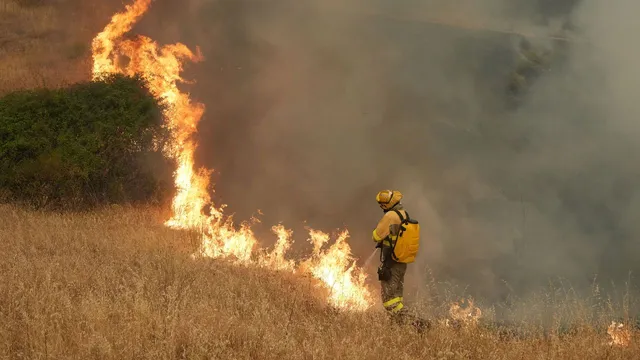
In Spain, wildfires have ravaged over two hundred thousand hectares this year, a figure that is double the historical average. The fires have been particularly devastating in the Guadalajara province, where the Burgohondo fire complex emerged as the largest wildfire in Spain's recorded history, covering more than one hundred thirty-five thousand acres. This alarming trend is attributed to a combination of extreme heat and climate change, which have transformed European landscapes into monocultures of flammable biomass. The abandonment of rural areas has further exacerbated the situation, as dense forests and shrubs encroach on open spaces, making fire management increasingly challenging.
Antonio J. Vera Mena, a Spanish wildland firefighter, highlights the need for a comprehensive approach to fire management that balances suppression with prevention. He emphasizes the importance of involving local communities in fire management strategies, as many developed countries prioritize fire suppression over prevention. The historical context reveals that since the 1940s, Spain has afforested approximately four million hectares, primarily with flammable species like pine and eucalyptus, which has contributed to the current wildfire crisis.
Stephen Pyne, a former wildland firefighter and historian, raises critical questions about why modernized countries, equipped with resources and technology, are facing such severe wildfire challenges. He points to the transformation of Europe's biomes and the increasing frequency of megafires as indicators of a larger systemic issue. The phenomenon of rural depopulation has accelerated over the past fifty years, leading to landscapes that are not only empty but also poorly managed, creating conditions ripe for wildfires.
As the situation continues to unfold, the urgency for effective fire management strategies becomes increasingly clear. Experts warn that without a shift in approach, the frequency and intensity of wildfires in Europe will only worsen, posing significant risks to both the environment and human communities. The need for local capacity development in land and fire management is paramount, as countries grapple with the realities of climate change and its impact on fire behavior.