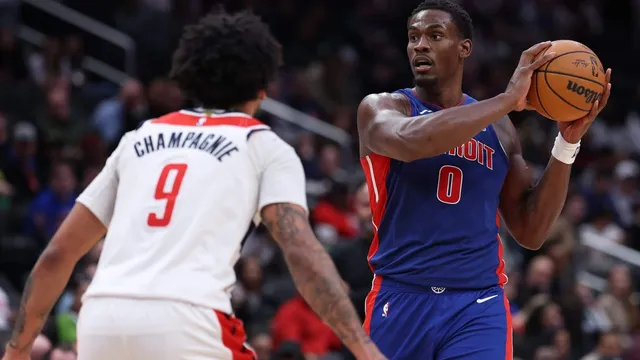
In the summer of 2026, Jalen Duren, a restricted free agent, finds himself at the center of a significant contract discussion in the NBA. After being named to the All-NBA team for the 2025-26 season, Duren is eligible for a lucrative five-year contract worth $287 million, which would start at 30 percent of the salary cap. However, the landscape of the league has changed, with many teams lacking the cap space to offer him a substantial deal. This situation has led to a unique dynamic where the Detroit Pistons, his current team, hold some leverage, but Duren also has options that could benefit him in the long run. One of the key options available to Duren is the qualifying offer, which would allow him to return to Detroit for one year at $9.6 million. This would enable him to become an unrestricted free agent the following summer, giving him the freedom to sign with any team in 2027. The opinions of NBA executives vary on what constitutes a fair offer for Duren, with estimates ranging from $120 million to $204.5 million over five years. The highest proposal reflects a hypothetical scenario where Duren accepts the qualifying offer and then secures a four-year deal at the 25-percent max next summer. This evolving market for Duren highlights the challenges faced by young, star-level restricted free agents in a league where cap space has become increasingly scarce. As teams reassess their financial strategies, the potential for Duren to take a less lucrative deal than expected has become a topic of discussion among executives, who note that the market has shrunk significantly for players in his position. The situation underscores the complexities of contract negotiations in the current NBA landscape, where the balance of power can shift rapidly based on team finances and player performance.