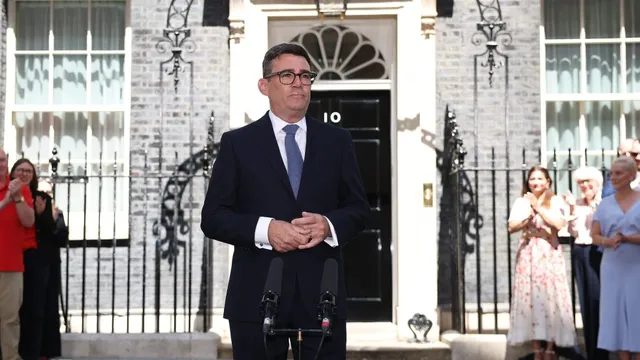
In June 2026, Andy Burnham was declared the leader of the Labour Party in the United Kingdom, following the resignation of Keir Starmer. Starmer's departure was prompted by a series of political missteps and a rebellion within his party, leading to significant pressure from Labour lawmakers for him to step down. Burnham, who previously served as the mayor of Greater Manchester, was the only candidate to secure enough support to replace Starmer, receiving backing from 379 out of 401 Labour lawmakers. He officially took office as prime minister on July 20, 2026, after meeting with King Charles III at Buckingham Palace.
Burnham's leadership comes at a time when the Labour Party is facing challenges, including a sluggish economy and public dissatisfaction with government services. In his first speech as leader, Burnham emphasized the need to restore hope to the British people and promised to address long-standing issues such as social care access and economic renewal. He acknowledged the difficulties his party faces, including the need to distance itself from Starmer's policies while also addressing the same pressing issues that plagued his predecessor.
The transition of power marks the sixth change in prime minister in the UK within a decade, highlighting the instability within British politics. Burnham's leadership is seen as a significant moment, as he aims to reverse what he describes as 40 years of poor political decisions that have led to a concentration of power away from local communities. He has pledged to create new jobs and enhance public control over essential services, aiming to rebuild trust in politics and provide a new direction for the country.
As Burnham prepares to lead, he faces the challenge of uniting a party that has experienced internal strife and public discontent. His commitment to a new, less divisive politics echoes the promises made by Starmer when he took office, raising questions about how effectively Burnham can implement change. The Labour Party's next national election is not due until 2029, giving Burnham time to establish his leadership and address the pressing issues facing the UK.