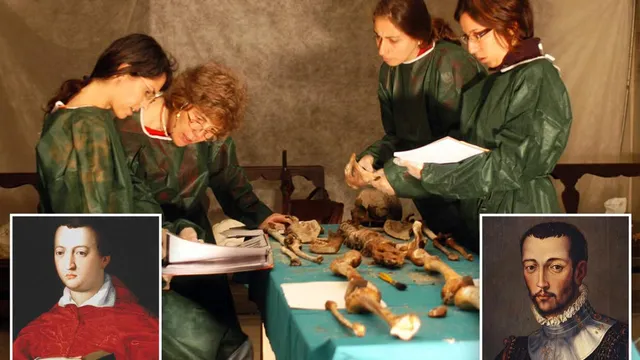
In a groundbreaking study conducted by researchers at Yale University, ancient DNA from Francesco I de' Medici, the Grand Duke of Tuscany, was analyzed to uncover the cause of his sudden death in 1587. This investigation, published in the journal iScience, involved collaboration with paleopathologists from the University of Pisa. The study revealed that both Francesco and his brother Giovanni de' Medici, who died 25 years earlier, had traces of malaria in their remains, effectively debunking long-standing theories that they were poisoned. The findings provide scientific proof that malaria was the likely cause of death, aligning with historical accounts of their symptoms.
The research team, led by Serena Tucci, assistant professor of anthropology at Yale, utilized DNA extracted from the ribs of the two Medici brothers. They discovered a novel strain of Plasmodium falciparum, the parasite responsible for the deadliest form of malaria, in Giovanni's bones, while Francesco's remains showed molecular traces of both P. falciparum and another species, P. malariae. This evidence is significant as malaria was endemic in central Italy during the Renaissance, yet the lack of definitive scientific proof allowed rumors of poisoning to persist for centuries.
Historical records from the time described symptoms consistent with malaria, referred to as “febbre terzana” by locals, and detailed the treatments the brothers underwent, including bloodletting. Despite these accounts, speculation about poisoning, particularly involving arsenic and Cardinal Ferdinando de' Medici, continued to thrive. Tucci noted that the persistence of these rumors could be attributed to the absence of conclusive evidence until now, as the scientific community had not previously confirmed the presence of malaria in the Medici remains.
The implications of this research extend beyond the Medici family, as the genetic approach used could potentially solve other historical mysteries. Gisella Caccone, a senior research scientist involved in the study, emphasized that understanding the evolution of malaria through historical specimens can enhance current methods for controlling the disease. This study not only sheds light on a historical event but also contributes to the broader understanding of malaria's impact on human health over time.