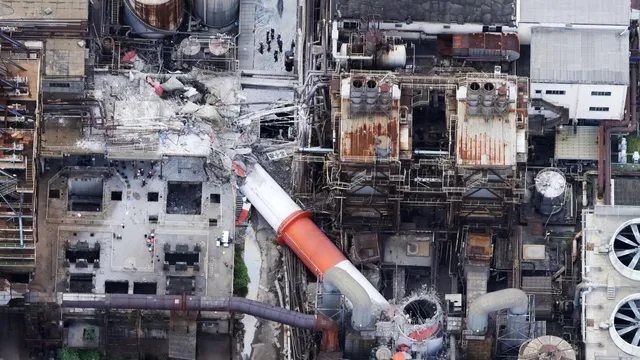
On July 28, 2026, a powerful earthquake struck the Kumamoto area in southwestern Japan, registering a magnitude of 7.1. The quake caused significant destruction, including the collapse of a shopping mall and several houses, leading to a search for trapped survivors. As rescue operations commenced, soldiers and emergency workers worked tirelessly to locate individuals who may still be trapped under the debris. The earthquake resulted in at least 13 confirmed fatalities, with many others reported missing. The situation was dire, as Prime Minister Sanae Takaichi emphasized the urgency of the rescue efforts, stating that it was a race against time to save those still unaccounted for.
In the aftermath of the earthquake, essential services were severely disrupted. Approximately 36,900 homes were left without electricity, and 9,500 homes were without gas. Communication networks were also down in several areas, complicating rescue and recovery efforts. Over 9,000 residents were forced to evacuate their homes and seek refuge in more than 500 shelters, where authorities worked to provide necessary amenities, including air conditioning, amid a heat wave that saw temperatures soar above 32 degrees Celsius (90 degrees Fahrenheit). The federal government prepared to deliver food and other essentials to the hardest-hit regions, as the community rallied to support those affected by the disaster.
The earthquake's impact was felt across various sectors, including transportation. Bullet train services were suspended, and Aso Kumamoto Airport had to close one of its runways, leading to flight cancellations. The damage assessment was ongoing, with officials noting that stone walls at Kumamoto Castle, a significant tourist attraction, were also affected. This castle had previously suffered damage during a deadly quake in 2016, which had already left a lasting mark on the region. The recent earthquake served as a stark reminder of the vulnerabilities faced by the area, as residents recalled the fear and destruction from past seismic events.
As rescue operations continued, the focus remained on locating survivors and providing support to those in need. The government and local authorities urged residents to remain vigilant and take care of themselves during the challenging conditions. The community's resilience was put to the test as they faced the aftermath of this devastating earthquake, with hopes for a swift recovery and the safe return of those still missing.