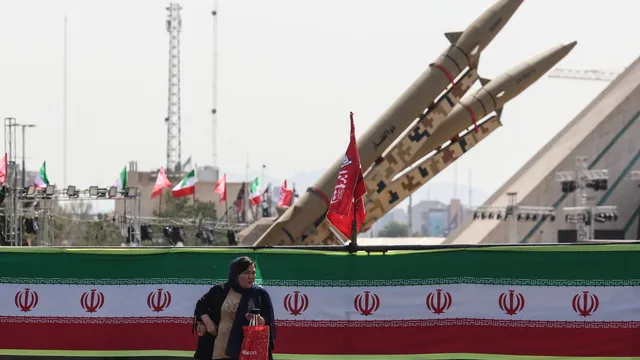
The history of US-Iran tensions in the Middle East is a complex narrative shaped by a series of political, military, and ideological confrontations that have evolved over decades. The roots of these tensions can be traced back to the 1953 CIA-backed coup that overthrew Iran's democratically elected Prime Minister Mohammad Mossadegh, reinstating the Shah, Mohammad Reza Pahlavi. This event sowed deep-seated resentment among Iranians towards the United States, as it was perceived as an infringement on their sovereignty. The 1979 Iranian Revolution, which resulted in the establishment of the Islamic Republic under Ayatollah Khomeini, marked a significant turning point, leading to the severance of diplomatic ties and the onset of hostilities, including the Iran Hostage Crisis where 52 American diplomats and citizens were held hostage for 444 days.
Throughout the 1980s, the Iran-Iraq War further complicated US-Iran relations. The United States initially supported Iraq under Saddam Hussein, providing intelligence and military aid, which Iran viewed as a direct threat. The war resulted in significant loss of life and economic hardship for both nations, but it also entrenched Iran's anti-American sentiment. In the following decades, Iran's pursuit of nuclear technology and its support for militant groups in the region, such as Hezbollah in Lebanon and various factions in Iraq, have been focal points of contention. The US has consistently accused Iran of destabilizing the region, leading to a series of sanctions aimed at curbing its nuclear ambitions and limiting its influence.
The tensions escalated dramatically in the 2000s, particularly following the US invasion of Iraq in 2003, which removed Iran's regional rival and created a power vacuum that Iran sought to fill. The Obama administration's attempt to engage diplomatically with Iran culminated in the 2015 Joint Comprehensive Plan of Action (JCPOA), which aimed to limit Iran's nuclear program in exchange for sanctions relief. However, the withdrawal of the United States from the agreement in 2018 under President Trump reignited hostilities, leading to a series of confrontations, including the assassination of Iranian General Qassem Soleimani in 2020, which brought the two nations to the brink of war.
As of 2026, the relationship remains fraught with tension, characterized by mutual distrust and ongoing geopolitical maneuvering. The Biden administration has expressed a desire to return to negotiations regarding Iran's nuclear program, but significant obstacles remain, including Iran's regional activities and its ballistic missile program. The situation is further complicated by the involvement of other regional players, such as Saudi Arabia and Israel, who view Iran as a significant threat. The historical context of US-Iran relations underscores a cycle of conflict and confrontation, with both nations struggling to navigate their interests in a volatile Middle Eastern landscape.