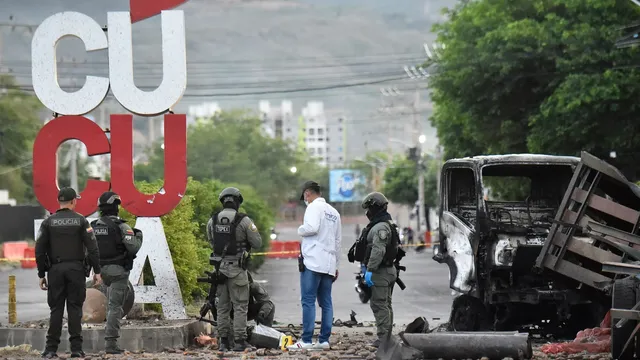
In Colombia, a car bombing occurred in the city of Cucuta, injuring at least 11 individuals, including eight police officers and three civilians. This incident took place just six days before the inauguration of President-elect Abelardo de la Espriella, who is set to take office on August 7, 2026. The bombing highlights the ongoing violence in Colombia, which has been plagued by an internal armed conflict for over six decades, involving various rebel groups, paramilitaries, and criminal organizations. The attack is part of a troubling trend of political violence that has marred the election season, with rebel groups accused of carrying out numerous attacks using bombs and explosive-laden drones.
Abelardo de la Espriella's election represents a significant shift in Colombia's political landscape, moving away from the left-wing policies of outgoing President Gustavo Petro, who was the country's first leftist leader. De la Espriella has pledged to take a hardline approach against rebel groups and criminal organizations, particularly those involved in the cocaine trade, which is a major issue in Colombia. His campaign was notably supported by the administration of former U.S. President Donald Trump, who advocated for a militaristic strategy to combat drug trafficking and criminal activity in the region.
The political climate in Colombia has been tense, with de la Espriella warning of an active assassination plot against him, although outgoing President Petro did not authorize any such plan. The upcoming inauguration ceremony is expected to be heavily secured, with 11,000 soldiers and police officers present to ensure safety. The car bombing incident underscores the challenges that the new administration will face as it seeks to address the long-standing issues of violence and drug trafficking in the country.
As Colombia prepares for this transition of power, the implications of the car bombing and the broader context of political violence will likely shape the new government's policies and strategies moving forward. The election of de la Espriella signals a return to a more aggressive stance against criminal organizations, which may further escalate tensions in a country already grappling with a complex history of conflict and violence.