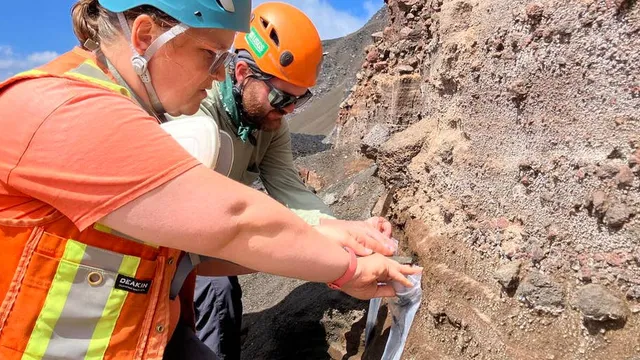
On July 2, 2026, three scientists from the U.S. Geological Survey (USGS) undertook a significant research mission at Kilauea, Hawaii's most active volcano. They flew into the summit area via helicopter to collect tephra samples from the wall of Halema‘uma‘u crater, which had previously been inaccessible. This sampling was made possible due to the rising floor of the crater caused by ongoing lava flows, allowing scientists to walk across the crater floor and access the tephra deposits. Tephra, which includes various volcanic materials ejected during eruptions, is crucial for understanding volcanic activity and hazards. The USGS aims to analyze these samples to gain insights into Kilauea's eruption behavior, magma storage, and potential volcanic hazards that could affect the surrounding areas. The research is particularly timely as Kilauea has experienced 50 eruptive episodes since December 23, 2024, with forecasts indicating the possibility of a 51st eruption occurring between July 11 and 15, 2026. The scientists' findings will contribute to a better understanding of the volcano's dynamics and help in predicting future eruptions, which is vital for the safety of local communities and the management of volcanic hazards in the region.