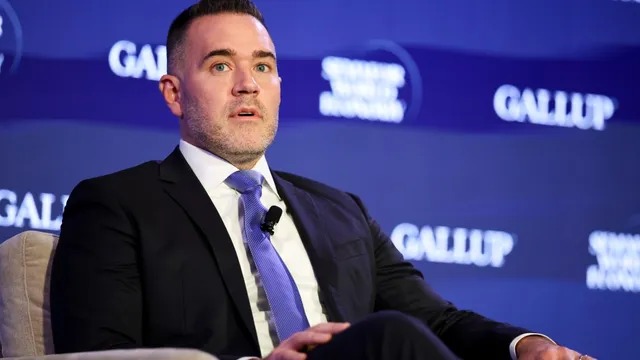
In a recent discussion at the Jobs for the Future Horizons conference, Jon Clifton, the CEO of Gallup, highlighted a troubling trend in global workplaces. He reported that approximately 80% of workers worldwide are disengaged, a statistic that has remained consistent over the past two years, aligning with levels seen in 2020. This disengagement is not merely a reflection of dissatisfaction with work itself; rather, it points to deeper issues within workplace environments. Clifton emphasized that while many employees enjoy their jobs, the prevailing workplace culture and management practices are failing to foster engagement and morale.
Clifton's remarks come at a time when the global economy is grappling with the consequences of low employee engagement, which Gallup estimates cost around $10 trillion in lost productivity last year. This figure represents about 9% of the global GDP, underscoring the significant economic impact of disengaged workers. The CEO's assertion that we are closer to colonizing Mars than fixing the broken workplace has resonated within the industry, highlighting the urgency of addressing these issues.
The rise of artificial intelligence (AI) has further complicated the landscape of work. While tech leaders like Elon Musk and Sam Altman express optimism about interplanetary travel and the potential of AI, many workers are experiencing increased anxiety regarding their roles in an evolving job market. Clifton pointed out that the future of AI is often dictated by executives and technologists, leaving employees feeling powerless in shaping their careers. This disconnect between technological advancement and employee experience raises questions about the future of work and the role of management in navigating these changes.
Clifton identified poor management as a critical factor contributing to workplace dysfunction. He stated that the quality of management accounts for 70% of the variance in employee misery at work. Effective management can significantly enhance employee engagement, particularly in the context of AI integration. Employees who feel supported by their managers in utilizing AI are eight times more likely to believe they can perform at their best. Therefore, Clifton argues that addressing management practices is essential for improving workplace conditions and ultimately achieving a more engaged workforce.