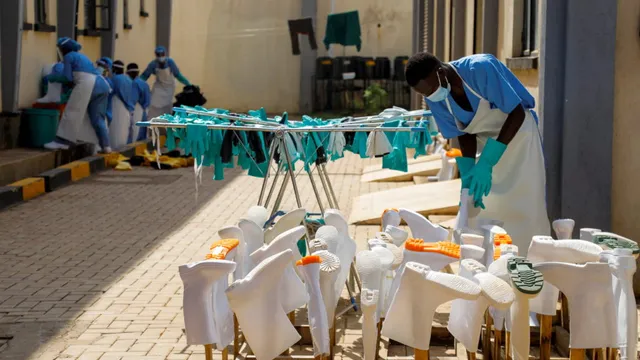
In mid-June 2026, Uganda successfully discharged its last Ebola patient, leading health authorities to declare the country free of the virus. This declaration came after a careful observation period recommended by the World Health Organization, which lasted 42 days, ensuring no further transmission occurred. The outbreak in Uganda was traced back to Congolese individuals who crossed the border seeking treatment for an unknown illness, which was later identified as Ebola. A total of 20 cases were reported in Uganda, but health officials confirmed that there was no indication of ongoing spread within the country.
The Ugandan Health Ministry noted that this outbreak was different from previous ones, as it stemmed from a fully documented importation event. Enhanced surveillance measures were implemented, and all identified contacts were quarantined and monitored for 21 days without evidence of further transmission. The Bundibugyo type of Ebola virus responsible for this outbreak does not have an approved vaccine or treatment, making the situation particularly delicate.
While Uganda has managed to control the outbreak, the situation in neighboring Congo remains dire. As of the latest reports, Congo has recorded 3,262 confirmed cases and 1,437 deaths, marking it as one of the fastest Ebola outbreaks on record. The outbreak in Congo was officially announced on May 15, 2026, coinciding with Uganda's confirmation of its first two cases. The rapid spread of the virus in Congo has raised concerns among health officials, especially as many communities in the affected provinces are either unreachable or have been abandoned by responders due to safety concerns.
The Ugandan government took proactive measures to prevent the spread of the virus, including suspending all public transportation and flights between Uganda and Congo. The health authorities' experience in managing Ebola outbreaks has been crucial in their response efforts. Tracing and isolating contacts of Ebola patients is essential to halting the disease's transmission, which typically presents as hemorrhagic fever. The World Health Organization identifies a family of fruit bats as the natural hosts of the Ebola virus, emphasizing the need for continued vigilance in monitoring and controlling outbreaks in the region.