In the United States, a developing El Niño climate pattern is expected to strengthen significantly during the latter half of 2026. The National Oceanic and Atmospheric Administration (NOAA) has reported that El Niño conditions are already present in the tropical Pacific and are anticipated to intensify through the end of the year. Some forecast models indicate that this event could rival or even surpass the strength of historic El Niño episodes, which have been known to significantly impact weather patterns across the country.
El Niño is characterized by warmer-than-average sea-surface temperatures in the central and eastern tropical Pacific Ocean. Meteorologists use the term "super" El Niño to describe exceptionally strong events, typically when ocean temperature anomalies exceed 2 degrees Celsius above average. While the NOAA does not officially classify El Niño events as "super," the potential for a very strong El Niño this winter has raised concerns among forecasters and meteorologists alike.
The impacts of El Niño on weather are significant, as it alters the position of the jet stream and influences storm development and movement. Historically, strong El Niño events have brought wetter conditions to the Southern U.S. and California, while increasing the likelihood of warmer-than-average temperatures in the northern states. According to Johnna Infanti, a meteorologist at NOAA's Climate Prediction Center, there is currently an 81 percent chance of a very strong El Niño developing between October and December, with peak intensity expected in late fall or early winter.
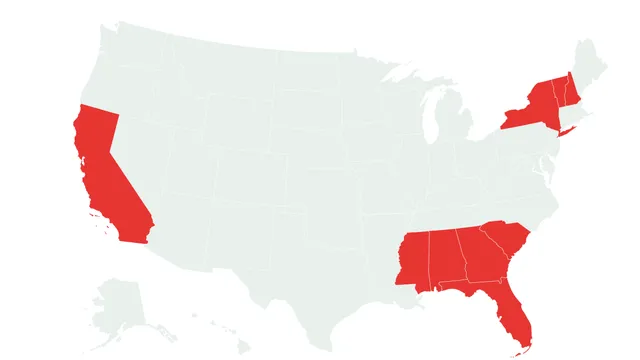
As forecasters monitor the situation closely, they anticipate that California will experience significant rainfall during the winter months, particularly in Southern California and the central Sierra Nevada, which may see increased snowfall. Other states, such as New York, Vermont, and New Hampshire, are also expected to face heavy rain and significant snow. The risk of flash flooding and river flooding is likely to increase, especially across the Deep South, Gulf Coast, and Florida, where severe weather episodes, including tornadoes, may become more frequent. Historical patterns suggest that certain states are more vulnerable to the impacts of El Niño, making it crucial for residents and officials to prepare for the potential consequences of this developing climate pattern.