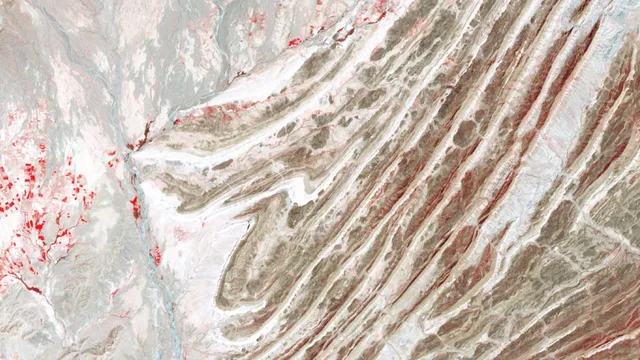
In Pakistan's Balochistan province, a significant geological feature known as an imbricate fan has formed due to the collision of the Eurasian and Indian tectonic plates. This collision began around 80 million years ago, during the age of dinosaurs, and has resulted in the creation of the Sulaiman Range, which spans approximately 2,500 square miles. The imbricate fan, located east of Murgha Kibzai, measures about 9 miles across and stretches up to 55 miles in length. It is characterized by alternating layers of sandstone and limestone, formed by thrust faults as the tectonic plates moved against each other.
The Sulaiman Range, which sits at an altitude of around 5,000 feet, showcases the dramatic effects of this geological tug-of-war. The forces at play have caused the rocks in the region to curve and stretch in complex patterns, creating a unique landscape. The imbricate fan is just one of several geological features that have emerged from this long-standing collision. The ongoing interaction between the plates continues to make the region a hotspot for earthquakes, as the two massive plates remain locked in their relentless struggle.
The collision has not only shaped the Sulaiman Range but has also contributed to the formation of other major mountain ranges, including the Himalayas and the Karakoram. These ranges are among the tallest on Earth, highlighting the immense geological forces at work. The tectonic plates are currently moving at a rate of more than 8 inches per year, which is significantly faster than many other tectonic plates today. This ongoing movement underscores the dynamic nature of the Earth's crust and the continuous evolution of the landscape.
As scientists study these geological formations, they gain insights into the history of the Earth and the processes that have shaped its surface. The imbricate fan and the surrounding mountains serve as a testament to the power of tectonic forces and the intricate dance of the Earth's plates over millions of years. Understanding these processes is crucial for predicting future geological events and assessing the risks associated with living in such tectonically active regions.