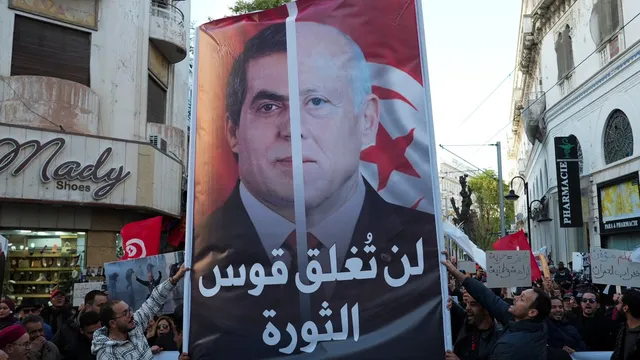
Tunisia has been experiencing significant unrest and dissatisfaction among its citizens, particularly following the power grab by President Kais Saied five years ago. The hopes for democracy that emerged after the 2011 revolution have largely faded, with many citizens feeling that their voices are being silenced. Journalists in the country have faced a severe crackdown on media freedom, leading to self-censorship and a lack of critical coverage of the government's actions. Human Rights Watch has reported a growing fear among citizens that any criticism of the government will not be tolerated, with no critic feeling safe under Saied's rule.
The ongoing heatwave has exacerbated the situation, leading to wildfires that have destroyed thousands of hectares of land. The state-owned electricity and gas company, STEG, has implemented staggered power cuts to manage the increased demand for cooling, which has resulted in crop destruction and damage to various industries. Analysts have pointed out that the lack of planning and investment in infrastructure has contributed to the crisis, with the government failing to prepare for the seasonal demands of summer.
Despite the widespread anger directed at the government and state-owned companies, President Saied has managed to retain some support from segments of society who recall the dysfunction of the pre-coup parliament. The speaker of parliament has urged citizens to channel their frustrations constructively, while Saied has promised to address the power and water shortages. However, the leadership of the largest opposition party, Ennahdha, remains imprisoned, and the fate of its leader, Rached Ghannouchi, is uncertain after his collapse in detention.
The international community, particularly the European Union and Algeria, has shown a preference for stability over democratic reforms in Tunisia. This has allowed Saied to consolidate his power further, as external actors prioritize their interests, such as controlling migration from Tunisia. The situation remains precarious, with censorship and repression stifling dissent and leaving many Tunisians feeling hopeless about the future.