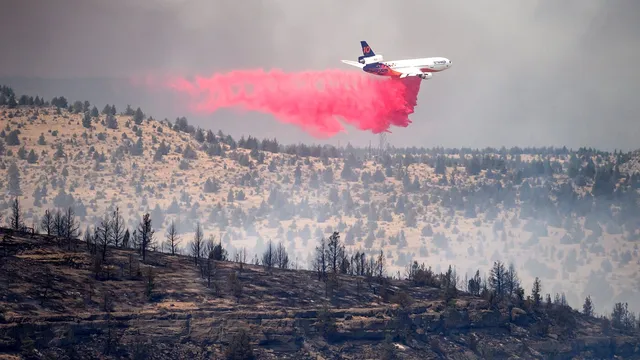
In Oregon, wildfires have wreaked havoc across central and eastern regions, prompting mass evacuations and significant disruptions to local ranching. The fires, which have consumed over a million acres, were primarily ignited by a recent lightning storm that brought minimal rain but strong winds, exacerbating the situation. As a result, thousands of residents have been forced to evacuate their homes, particularly in small towns like Harper, where ranchers are struggling to relocate their cattle and secure feed amidst the destruction of public range land. The smoke from these fires has created hazardous conditions, leading to road closures and a sense of uncertainty among the affected communities.
The state climatologist, Larry O'Neill, has expressed concerns about the ongoing fire season, noting that the weather conditions are not expected to improve in the near future. He highlighted that the atmosphere is rapidly depleting moisture from the landscape, which is contributing to the severity of the fires. This situation is compounded by significant cuts in funding and staffing for federal public lands agencies, which have reduced wildfire prevention resources. The National Interagency Fire Center has reached its highest preparedness level, indicating that federal resources may be insufficient to respond to additional major fires.
The combination of climate change, political decisions, and mismanagement of public lands has led to a critical situation in Oregon. As the fires continue to burn with little containment, the livelihoods of ranchers and the safety of residents remain at risk. The community is left grappling with the aftermath of these wildfires, questioning how they will recover once the flames are extinguished. The long-term effects on the environment and local economy are yet to be fully understood, but the immediate impact is already being felt by those who depend on the land for their survival.
As the state braces for what could be one of its worst wildfire seasons, the urgency for effective fire management and climate adaptation strategies has never been more apparent. The ongoing situation serves as a stark reminder of the challenges posed by climate change and the need for comprehensive policies to address the increasing frequency and intensity of wildfires in the region.