Russia suffers massive troop losses in Ukraine conflict
military conflicts
tragic
impactful

Russia suffers massive troop losses in Ukraine conflict

21
(Update: )
sovereign state in Eastern Europe and Northern Asia
country in Eastern Europe
town in Russia
City in Zaporizhia Oblast (province) of Ukraine
  • Ukraine's General Staff reported 1,320 Russian troops lost in one day, with heavy fighting in the Pokrovsk and Huliaipole directions.
  • In addition to personnel losses, Russia also lost four tanks and 53 artillery systems, contributing to a total of approximately 1,419,090 personnel losses since February 2022.
  • The ongoing conflict continues to see high levels of military engagement, with both sides actively targeting each other's positions.
Share opinion
2

Story

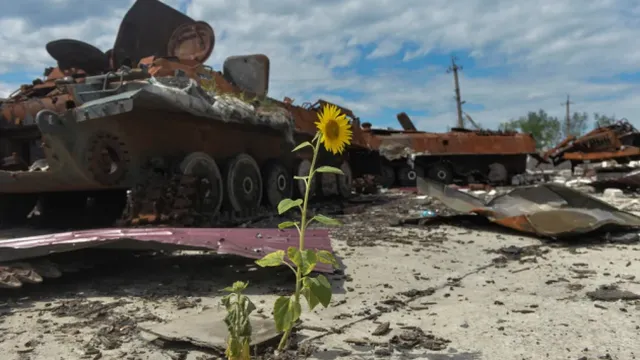
On July 12, 2026, Ukraine's General Staff reported significant losses for Russian forces in the ongoing conflict in Ukraine. Over the past 24 hours, Russian troops lost 1,320 personnel, alongside the destruction of four tanks and 53 artillery systems. This brings Russia's total estimated personnel losses since the beginning of the full-scale invasion on February 24, 2022, to approximately 1,419,090. The report highlighted that the heaviest fighting occurred in the Pokrovsk and Huliaipole directions, where Ukrainian defenders successfully repelled numerous Russian assaults. In addition to personnel losses, Ukraine's military reported the destruction of various military assets, including six armored combat vehicles, four multiple launch rocket systems, and over 2,000 operational-tactical UAVs. The report also detailed the extensive use of drones by Russian forces, with 8,866 attack drones launched during this period. Furthermore, Russia conducted multiple missile strikes and airstrikes, targeting Ukrainian positions and settlements, which included 244 guided aerial bombs. The General Staff of Ukraine noted that 260 combat engagements were recorded along the front line, indicating a high level of ongoing military activity. Ukrainian forces also targeted Russian troop concentrations and military infrastructure, striking key locations such as the Kalmiuske military training ground and drone command posts in occupied regions. These actions reflect Ukraine's continued efforts to disrupt Russian military operations and diminish their capabilities. Overall, the reported losses and military engagements underscore the intensity of the conflict and the ongoing challenges faced by Russian forces in Ukraine. The situation remains fluid, with both sides engaged in continuous combat operations, and the toll on personnel and equipment continues to rise as the war progresses.

Context

The historical context of the Russia-Ukraine conflict is deeply rooted in a complex interplay of national identity, territorial disputes, and geopolitical interests. Ukraine, which gained independence from the Soviet Union in 1991, has long been a focal point of tension between Russia and the West. The dissolution of the Soviet Union left a significant Russian-speaking population in Ukraine, particularly in the eastern regions, which has contributed to a sense of division within the country. The 2014 Euromaidan protests, sparked by the then-President Viktor Yanukovych's decision to suspend an association agreement with the European Union in favor of closer ties with Russia, marked a pivotal moment in Ukraine's struggle for sovereignty and alignment with Western Europe. This unrest culminated in Yanukovych's ousting and the subsequent annexation of Crimea by Russia, which was widely condemned by the international community as a violation of international law and Ukraine's territorial integrity. Following the annexation of Crimea, the conflict escalated into a war in the Donbas region of eastern Ukraine, where pro-Russian separatists declared independence from Ukraine. This conflict has resulted in thousands of deaths and has displaced millions of people. The involvement of Russia in supporting these separatists has further complicated the situation, leading to sanctions from Western nations and a deterioration of Russia's relations with the West. The Minsk agreements, aimed at ceasing hostilities and establishing a framework for peace, have seen limited success, with ongoing skirmishes and a fragile ceasefire that has yet to bring about a lasting resolution. The geopolitical implications of the Russia-Ukraine conflict extend beyond the immediate region, influencing global power dynamics. NATO's eastward expansion and Ukraine's aspirations to join the alliance have been perceived by Russia as direct threats to its sphere of influence. This has led to a resurgence of Cold War-era tensions, with military buildups and strategic posturing on both sides. The conflict has also highlighted the challenges of post-Soviet state-building, as Ukraine grapples with issues of corruption, governance, and national identity amidst external pressures. The struggle for Ukraine's future—whether to align more closely with Europe or to maintain ties with Russia—remains a contentious issue that continues to shape the region's political landscape. As of 2026, the situation remains fluid, with ongoing diplomatic efforts to resolve the conflict and address the humanitarian crisis resulting from years of warfare. The international community continues to monitor the situation closely, with calls for a renewed commitment to peace negotiations and support for Ukraine's sovereignty. The historical context of the Russia-Ukraine conflict serves as a reminder of the complexities of national identity, the impact of historical grievances, and the challenges of navigating a multipolar world where regional conflicts can have far-reaching consequences.