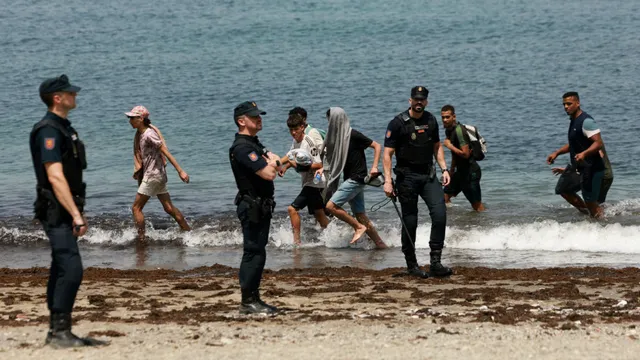
In recent days, Spain has faced a significant crisis at its North African territory of Ceuta, where a surge of migrants attempted to breach the border with Morocco. This event resulted in the tragic deaths of at least 67 migrants, with some drowning and others killed in a stampede as they tried to cross a breakwater barrier. In response to this crisis, the Spanish government installed a 500-meter-long sea barrier to prevent further crossings. The situation has drawn attention to Spain's migration policies, which differ from the more stringent approaches seen in other European Union countries.
Spanish Prime Minister Pedro Sánchez criticized the reactions of some EU leaders, who suggested suspending Spain from the Schengen zone due to the crisis. He described these calls as driven by prejudice and misinformation. Despite the challenges faced during this incident, Spain has reported fewer illegal migrants in recent years compared to its Mediterranean neighbors, Italy and Greece. The Spanish Interior Minister, Fernando Grande-Marlaska, emphasized the country's commitment to enforcing the law while asserting that Morocco is not a threat to Spain.
As the situation unfolded, many migrants who had crossed into Ceuta began to return to Morocco, expressing feelings of hunger, anger, and mistreatment on the Spanish side of the border. Most of these migrants were Moroccan, with a smaller number coming from sub-Saharan Africa. Some individuals reported that they felt forced to return due to the lack of access to basic necessities, such as food. However, others who managed to reach Ceuta expressed their determination to stay, despite the challenges they faced.
The crisis has disrupted life along Ceuta's Tarajal beach, where local residents have observed the ongoing movement of migrants. The events have raised questions about the management of migration in the region and the responsibilities of EU member states in addressing such situations. Sánchez has called for a videoconference of EU interior ministers to discuss a coordinated response to migration challenges, emphasizing that the security of external borders is a shared responsibility among all member states.