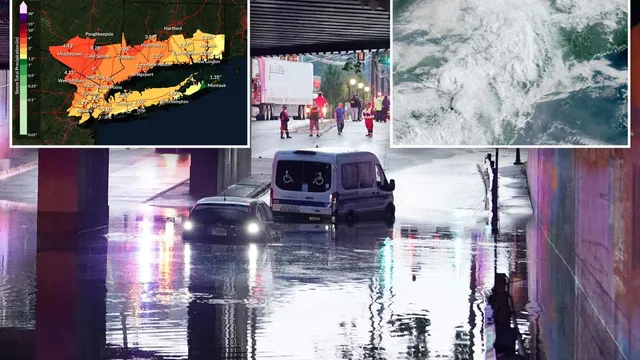
On July 28, 2026, New York City and surrounding areas are facing a Flood Watch issued by the National Weather Service due to a slow-moving low-pressure system. This weather pattern is expected to bring multiple rounds of heavy showers and thunderstorms from Tuesday through Wednesday, with forecasts indicating that some areas could receive over 5 inches of rain. The potential for life-threatening flash flooding has raised concerns among local authorities and residents alike. The Flood Watch extends beyond the city to parts of Long Island, the Hudson Valley, northern New Jersey, and eastern Pennsylvania, affecting a wide range of communities.
The National Weather Service has warned that isolated severe thunderstorms are possible, particularly in northeast New Jersey and New York City, with heavy rain rates of 2 to 3 inches per hour in some locations. The risk of flash flooding is categorized as Moderate (40-70%) for New York City, the Mid-Hudson, and Long Island, while other regions like the Capital Region and Mohawk Valley face a Slight chance (15-40%). The rest of New York State has a Marginal chance (5-15%) of experiencing flash floods. Heavy rainfall is expected to continue through Wednesday morning, with the Catskills potentially seeing totals of 6 to 8 inches, creating hazardous travel conditions.
In anticipation of the severe weather, hundreds of flights have already been canceled across New York area airports, including significant disruptions at JFK, LaGuardia, and Newark. This has affected between 10% and 20% of all flights, causing travel chaos for many passengers. Local officials, including New York Governor Kathy Hochul, have urged residents to remain vigilant and prepared for the impending storms. Governor Hochul emphasized the importance of monitoring local forecasts and taking precautions to ensure safety during this prolonged rain event.
New York City Mayor Zohran Mamdani echoed these sentiments, advising residents to prepare for the heavy rain and potential flash flooding. He highlighted that even brief periods of rainfall could lead to flooding in streets, basements, and low-lying areas. The situation is compounded by the severe storms that already impacted New Jersey the previous night, bringing lightning, hail, and flash flooding. As the weather unfolds, local agencies are mobilized to respond to emergencies and keep residents safe during this critical time.