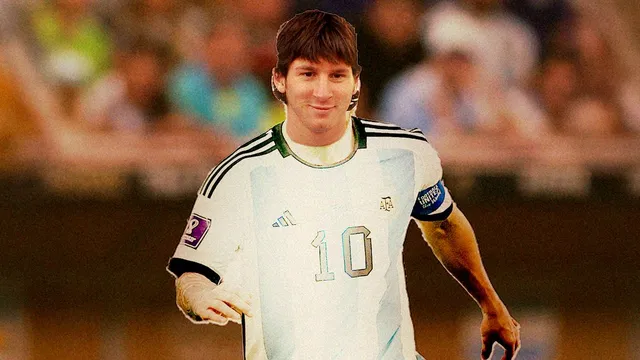
In Qatar, Lionel Messi, at the age of 39, made a remarkable return to the World Cup, defying expectations that he would retire from international football much earlier. Initially, many believed that his last appearance on the world stage was during the 2018 World Cup when he was 31. However, Messi's career trajectory has been emblematic of a broader trend in professional football, where aging players are extending their careers beyond traditional limits. This phenomenon is not isolated to Messi; other notable players, such as Brazil's Neymar and Germany's Manuel Neuer, have also announced their retirements later than anticipated, showcasing a shift in the landscape of international football.
Research indicates that the average age of players in the UEFA Champions League has increased over the years, rising from 24.9 years in the 1992-93 season to 26.5 years by 2017-18. This trend was evident at the 2026 FIFA World Cup, which featured eight players in their forties, surpassing the total from all previous tournaments combined. Among these players was Cape Verde's 40-year-old goalkeeper Vozinha, who emerged as one of the tournament's standout performers. While players typically reach their physical peak in their mid-to-late twenties, advancements in sports science and individualized training regimens have allowed older athletes to maintain their competitive edge.
The evolution of training methods has played a crucial role in this shift. Coaches are now tailoring training programs to accommodate each player's unique injury history, recovery needs, and physical capabilities, rather than applying a one-size-fits-all approach. As players age, their experience becomes a significant asset, allowing them to compensate for any decline in physicality with improved decision-making and game intelligence. This adaptation is particularly important in a sport where the demands on players can be intense and physically taxing.
For global icons like Lionel Messi and Cristiano Ronaldo, the decision to extend their careers is influenced by more than just athletic performance; it has become a scientific endeavor. The focus on longevity in sports has transformed retirement from a matter of physical decline to a personal choice based on readiness to step away from the game. As a result, the landscape of professional football is changing, with players redefining the boundaries of age and performance.