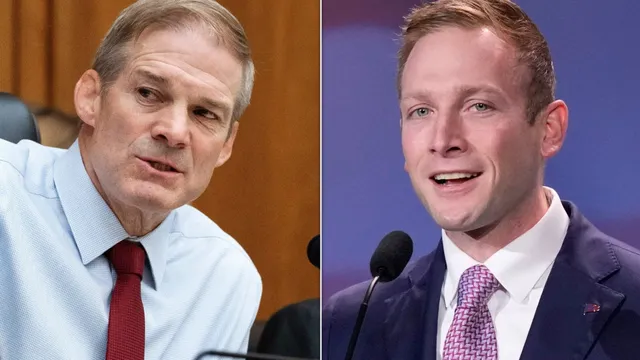
In a recent interview on CNN, Representative Jim Jordan from Ohio faced intense questioning regarding his support for fellow Congressman Max Miller, who has been accused of serious domestic abuse. The allegations against Miller include throwing hot water at his wife, holding a gun to her head, and potentially fracturing their young daughter's collarbone. These claims have raised significant concerns about Miller's fitness for office, prompting CNN's Kasie Hunt to ask Jordan whether Miller should resign or withdraw from his reelection campaign. Jordan dismissed the allegations as a 'family matter' and expressed his hope that Miller would win reelection, emphasizing that he believes Miller has performed well in Congress.
During the exchange, Hunt highlighted the gravity of the accusations against Miller, which have been reported by major news outlets, including The New York Times. Despite the serious nature of the claims, Jordan maintained that Miller is a good colleague and should be supported during this difficult time. He also referenced a previous incident involving Democratic candidate Graham Platner, suggesting that the scrutiny faced by Miller was politically motivated. Jordan's defense of Miller has sparked controversy, as many question the appropriateness of supporting a candidate facing such serious allegations.
The situation has drawn attention not only for the allegations against Miller but also for Jordan's response, which many view as indicative of a broader trend among some politicians to overlook serious accusations in favor of party loyalty. The debate surrounding Miller's candidacy raises important questions about accountability and the standards to which elected officials should be held, especially in cases involving domestic violence. As the election approaches, the implications of these allegations and Jordan's support for Miller will likely continue to be a topic of discussion among voters and political analysts alike.
In conclusion, the confrontation between Jordan and Hunt highlights the complexities of political support in the face of serious allegations. It underscores the challenges that arise when personal and political loyalties intersect, particularly in cases involving domestic abuse. As the public continues to grapple with these issues, the outcome of Miller's reelection bid may serve as a litmus test for how voters respond to allegations of misconduct among their representatives.