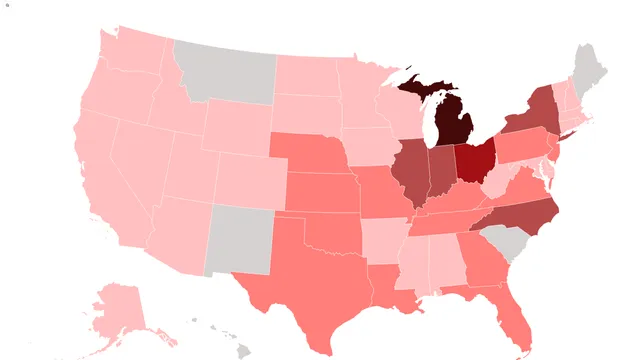
In the United States, the Centers for Disease Control and Prevention (CDC) has reported a significant rise in cyclospora infections, with the number of laboratory-confirmed cases reaching 6,707 across 45 states as of July 28, 2026. This marks a sharp increase from the previous week's count of 4,173 cases across 41 states. The CDC has expanded its list of states affected by domestically acquired cyclospora infections, now including Oregon, South Dakota, Vermont, and Delaware. The rise in cases has prompted federal and state health officials to enhance surveillance efforts to investigate clusters of illness nationwide.
Cyclospora is a microscopic parasite that causes cyclosporiasis, a gastrointestinal illness. Unlike many foodborne bacteria, cyclospora does not typically spread directly from person to person, as the parasite requires time in the environment to become infectious. This year's increase in cases has raised concerns among health officials, who are actively tracing illnesses and determining whether additional food products may be involved. The CDC has noted that many of the additional reports of illness have come from Michigan and Ohio, where the highest case counts are recorded.
Outbreaks of cyclospora are often linked to fresh produce consumed raw, as cooking can eliminate the parasite. Food safety experts emphasize that no fresh produce is entirely risk-free during a cyclospora outbreak, as contamination can occur before the food reaches consumers. Specific items such as bagged greens, chopped lettuce, fresh herbs, and berries have been associated with previous outbreaks due to the parasite's ability to cling to rough surfaces and crevices that are difficult to clean thoroughly.
In addition to the confirmed cases, the CDC is aware of over 11,500 additional cases that have not yet been laboratory confirmed or require further investigation. This includes determining whether patients traveled internationally before becoming ill. The ongoing investigation and heightened surveillance underscore the importance of public health advisories and recall notices, as health officials work to mitigate the spread of this gastrointestinal illness.