Zelenskyy ousts defense minister amid growing unrest in Ukraine
politics
controversial
provocative

Zelenskyy ousts defense minister amid growing unrest in Ukraine

31
(Update: )
President of Ukraine since 2019
Ukrainian politician
  • Mykhalo Fedorov was dismissed as Ukraine's defense minister on July 15, 2026, amid a cabinet reshuffle.
  • His removal sparked protests and resignations from military leaders, indicating significant unrest within the armed forces.
  • The decision has raised concerns about the stability of Ukraine's defense strategy during an ongoing conflict with Russia.
Share opinion
3

Story

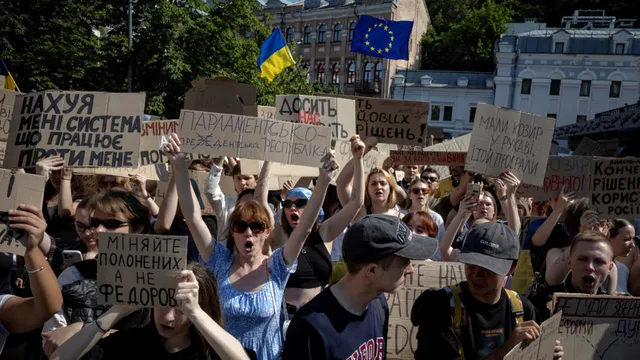
On July 15, 2026, Mykhalo Fedorov was dismissed from his position as Ukraine's defense minister following a meeting with military leadership. This decision was part of a broader cabinet reshuffle that also saw Yulia Svyrydenko removed from her role as prime minister. Fedorov, who had been in office for only six months, was known for his innovative approach to drone warfare and digital transformation within the government. His removal sparked significant backlash from opposition lawmakers, civil society activists, and military advisers, who expressed disbelief and anger over the abrupt change in leadership during a time of war. Fedorov's tenure was marked by notable achievements, including efforts to block Russian access to Starlink satellites, which hindered their drone warfare capabilities. However, speculation about his dismissal had been circulating due to reported conflicts with other cabinet members regarding defense spending. In his first public comments after being ousted, Fedorov cited a clash with General Oleksandr Syrskiy, Ukraine's top military commander, as a key reason for his removal. He claimed that his initiatives were being blocked and criticized Syrskiy for not engaging in open discussions about the issues at hand. The reaction to Fedorov's dismissal was swift and intense, with hundreds of people rallying outside President Volodymyr Zelenskyy's offices in Kyiv the following day. Prominent military figures, including the deputy commander of Ukraine's Air Force, resigned in protest, highlighting the discontent within the military ranks. Political analysts and opposition figures condemned the decision, labeling it a serious mistake and expressing concerns about the instability it could create in the defense sector during an ongoing conflict with Russia. Fedorov's approach to defense, particularly his focus on drone warfare, had been seen as a departure from traditional military strategies. His popularity among the public and within certain political circles had grown due to his efforts to modernize Ukraine's military capabilities. The ongoing war with Russia has necessitated innovative strategies, and many believed that Fedorov's vision was crucial for Ukraine's defense efforts. The cabinet reshuffle, while aimed at renewing leadership, raised questions about the future direction of Ukraine's military strategy and the potential impact on the ongoing conflict.

Context

The Ukraine drone warfare strategy has evolved significantly in recent years, particularly in response to the ongoing conflict with Russia. Drones have become a pivotal component of Ukraine's military operations, providing enhanced reconnaissance, surveillance, and strike capabilities. The integration of unmanned aerial vehicles (UAVs) into Ukraine's military strategy has allowed for more effective targeting of enemy positions, minimizing risks to personnel while maximizing operational efficiency. This shift towards drone warfare reflects a broader trend in modern military engagements, where technology plays a crucial role in shaping the battlefield dynamics. One of the key aspects of Ukraine's drone warfare strategy is the emphasis on both indigenous development and the procurement of advanced UAV systems from international partners. Ukraine has invested in the development of its own drone technology, resulting in the production of various models that cater to different operational needs. Additionally, partnerships with NATO countries have facilitated access to cutting-edge drone systems, enhancing Ukraine's capabilities in intelligence gathering and precision strikes. This dual approach not only strengthens Ukraine's military autonomy but also fosters innovation within its defense industry. The operational use of drones in Ukraine has demonstrated their effectiveness in various combat scenarios. Drones have been employed for real-time intelligence, allowing commanders to make informed decisions based on accurate battlefield assessments. Furthermore, the ability to conduct targeted strikes with minimal collateral damage has proven advantageous in urban warfare settings, where civilian safety is a paramount concern. The psychological impact of drone warfare cannot be overlooked, as the presence of UAVs can deter enemy movements and disrupt their operational plans, thereby shifting the balance of power in favor of Ukrainian forces. However, the reliance on drone technology also presents challenges. The threat of counter-drone measures from adversaries necessitates continuous adaptation and innovation in Ukraine's drone warfare strategy. As the conflict evolves, so too must the tactics employed by Ukrainian forces to maintain their technological edge. Moreover, the ethical implications of drone warfare, including concerns over civilian casualties and the potential for escalation, require careful consideration as Ukraine navigates its military strategy in the context of international law and humanitarian principles. Overall, Ukraine's drone warfare strategy represents a critical component of its defense posture, reflecting a commitment to leveraging technology in the pursuit of national security.