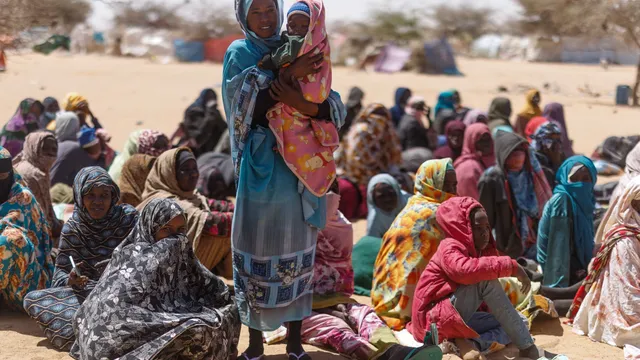
In Sudan, particularly in the Darfur region, a severe humanitarian crisis has unfolded since the conflict erupted in April 2023. The paramilitary group Rapid Support Forces (RSF) has been accused of committing widespread atrocities, including mass executions, sexual violence, and the destruction of villages. The National Commission for Human Rights (NCHR) has been working under extreme conditions to document these abuses, despite facing significant security threats. Their efforts are crucial in gathering evidence of human rights violations, which are essential for any future judicial processes.
The RSF's actions have led to the displacement of nearly 14 million people and the deaths of tens of thousands. Reports indicate that the RSF has taken control of key cities, such as el-Geneina and el-Fasher, where they have allegedly established mass graves. The NCHR has documented the detention of 1,480 civilians in el-Fasher, including many women and children, raising alarms about the ongoing human rights abuses.
International investigations, including a UN fact-finding mission, have corroborated the findings of the NCHR, concluding that the RSF's systematic violence constitutes genocide. Survivors have reported horrific experiences, including gang rapes and starvation tactics employed against civilians. The situation is dire, with the RSF's territorial control making it increasingly difficult for monitoring teams to access violation sites and detention centers.
The ongoing violence and lack of accountability raise serious concerns about the effectiveness of global mechanisms to address such atrocities. Abakar emphasized that without genuine accountability, victims will continue to suffer, and the cycle of violence will persist. The documentation efforts by the NCHR are vital for establishing a foundation for future legal actions, whether at a national or international level, to ensure that justice is served and that the rule of law is upheld.