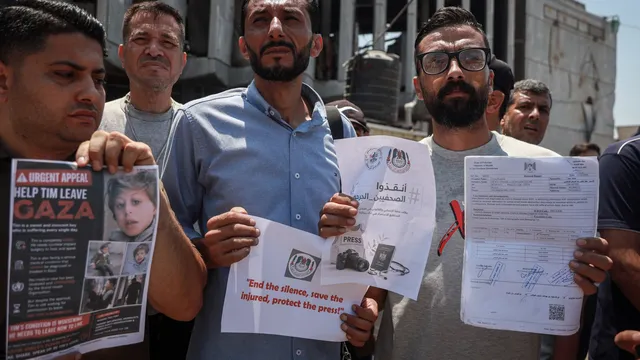
Injured journalists in Gaza demand urgent medical evacuation for treatment
military conflicts
tragic

Injured journalists in Gaza demand urgent medical evacuation for treatment

11
(Update: )
ancient Levantine metropolis and modern city in Gaza Strip, State of Palestine
  • Gaza journalists are facing severe injuries and chronic illnesses due to the ongoing conflict.
  • The Palestinian Journalists Syndicate is advocating for the medical evacuation of injured journalists.
  • Urgent action is needed as over 18,500 patients in Gaza require specialized medical care unavailable locally.
Share opinion
1

Story

In Gaza, journalists have been facing severe challenges due to injuries sustained during the ongoing conflict. One journalist, who survived an Israeli air raid on January 7, 2024, has been living with debilitating pain and has undergone over 25 surgeries since then. His injuries have drastically reduced his ability to work, and he is now torn between the desire to continue documenting the war and the need for specialized medical treatment abroad. The Palestinian Journalists Syndicate has organized a sit-in to advocate for the medical evacuation of injured journalists, emphasizing the urgent need for international support. The situation for journalists in Gaza has become increasingly dire, with many suffering from both physical injuries and chronic illnesses. One journalist, diagnosed with severe Crohn's disease in 2022, has been unable to access necessary treatment due to the ongoing conflict. He carries medication with him while on assignments, highlighting the precarious balance between his professional duties and his health. The lack of medical facilities in Gaza has left many patients, including journalists, in a state of crisis, unable to receive the care they desperately need. The Palestinian Journalists Syndicate has submitted medical files to international organizations, urging them to facilitate the evacuation of injured journalists and ensure their right to return after treatment. They hold Israel accountable for the restrictions preventing these journalists from leaving Gaza, while also criticizing international organizations for their inadequate responses. The call for action is urgent, as many journalists express their determination to fight for their rights and seek the medical attention necessary to continue their work. The World Health Organization has reported that over 18,500 patients in Gaza require urgent medical evacuation for specialized care that is unavailable locally. The ongoing siege imposed by Israel has severely restricted access to medical facilities, leaving those in need of urgent care trapped within the Gaza Strip. Aid agencies have warned that these restrictions have delayed access to essential treatment for patients with serious injuries and chronic illnesses, exacerbating the humanitarian crisis in the region.

Context

The impact of the Israeli siege on Gaza healthcare has been profound and multifaceted, affecting the delivery of medical services, the availability of essential supplies, and the overall health outcomes of the population. The siege, which has been in place for over a decade, has severely restricted the movement of people and goods into and out of Gaza. This has led to a critical shortage of medical supplies, including medications, surgical instruments, and basic healthcare necessities. Hospitals and clinics are often unable to provide adequate care due to these shortages, resulting in increased morbidity and mortality rates among the population. The lack of access to specialized medical care, particularly for chronic illnesses and emergency situations, has further exacerbated the health crisis in the region. Moreover, the siege has had a detrimental effect on the mental health of the Gazan population. The ongoing conflict, coupled with the stress of living under siege, has led to a rise in mental health issues, including anxiety, depression, and post-traumatic stress disorder (PTSD). The healthcare system in Gaza is ill-equipped to address these mental health needs, as there are limited resources and trained professionals available. This gap in mental health services not only affects individuals but also has broader implications for community well-being and social cohesion. The healthcare workforce in Gaza has also been significantly impacted by the siege. Many healthcare professionals have left the region in search of better opportunities, leading to a shortage of qualified personnel. Those who remain often work under extremely challenging conditions, facing long hours, inadequate facilities, and the constant threat of violence. This has resulted in burnout and decreased morale among healthcare workers, further compromising the quality of care that can be provided to patients. The lack of training opportunities and professional development due to the siege has also hindered the ability of healthcare workers to keep up with advancements in medical practice. In conclusion, the Israeli siege on Gaza has created a humanitarian crisis that extends far beyond immediate physical health concerns. The restrictions on movement and access to resources have led to a collapse of the healthcare system, with dire consequences for the population's health and well-being. Addressing these issues requires urgent international attention and intervention to ensure that the people of Gaza can access the healthcare they need and deserve. Without significant changes to the current situation, the health outcomes for the population will continue to deteriorate, leading to long-term consequences for future generations.