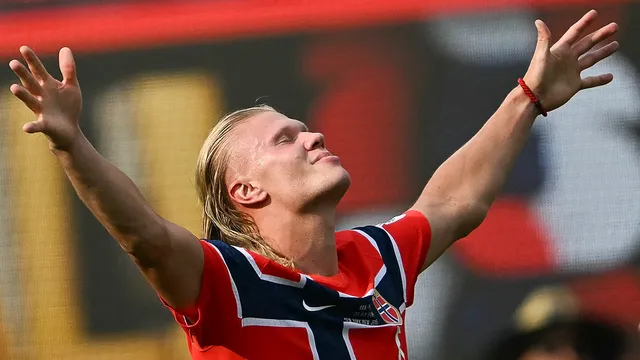
The Norway football team has a rich history in international football, particularly in the context of the FIFA World Cup. Established in 1902, the Norwegian Football Federation (NFF) has overseen the development of the national team, which has experienced varying degrees of success over the years. Norway's first appearance in the World Cup came in 1938, where they reached the knockout stage, showcasing their potential on the global stage. However, it wasn't until the 1990s that Norway truly made its mark, qualifying for the World Cup in 1994 and 1998. The 1994 tournament in the United States was particularly memorable, as Norway advanced to the knockout stage, defeating Brazil in a stunning upset, which remains one of the highlights of their World Cup history. This victory not only boosted the team's morale but also solidified their reputation as a competitive force in international football.
Despite their early successes, Norway has faced challenges in maintaining consistent performance in subsequent World Cups. The team failed to qualify for the 2002, 2006, and 2010 tournaments, leading to a period of reflection and rebuilding. The introduction of new talent and a focus on youth development have been pivotal in revitalizing the team. Players like Erling Haaland and Martin Ødegaard have emerged as key figures, bringing renewed hope for future qualifications. The NFF has invested in training facilities and coaching, aiming to enhance the team's competitiveness on the world stage.
As of 2026, Norway is once again on the cusp of a potential resurgence in international football. The team's recent performances in European qualifiers and friendly matches have shown promise, with a blend of experienced players and young talent. The current coaching staff has emphasized a tactical approach that leverages the strengths of their players, aiming to create a cohesive unit capable of challenging stronger teams. The upcoming World Cup presents an opportunity for Norway to not only qualify but to make a significant impact, building on the legacy of past achievements while looking forward to a bright future.
In conclusion, the history of the Norway football team in the World Cup is marked by early successes, challenges, and a promising resurgence. The team's journey reflects the evolution of football in Norway, characterized by a commitment to development and a passion for the game. As they prepare for future competitions, the hope is that Norway can once again capture the hearts of football fans worldwide, continuing to build on their storied history in the World Cup.