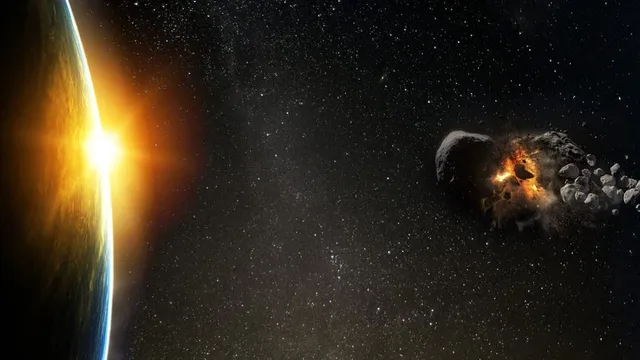
Planetary defense against asteroids is a critical area of research and development, particularly as the threat of near-Earth objects (NEOs) continues to grow. NEOs, which include asteroids and comets, can pose significant risks to our planet, potentially leading to catastrophic impacts. The primary strategies for planetary defense focus on detection, deflection, and disruption of these celestial bodies. Early detection is essential, as it allows for timely intervention. Various observatories and space agencies around the world are engaged in tracking and cataloging NEOs, utilizing advanced telescopes and radar systems to identify their trajectories and assess their potential threat levels. The establishment of the Planetary Defense Coordination Office (PDCO) by NASA exemplifies the global commitment to monitoring and mitigating the risks posed by asteroids.
Once a potentially hazardous asteroid is detected, the next step is to determine the most effective method of deflection or disruption. Several techniques have been proposed, including kinetic impactors, gravity tractors, and nuclear devices. Kinetic impactors involve sending a spacecraft to collide with the asteroid at high speed, altering its trajectory. The Double Asteroid Redirection Test (DART) mission, which successfully demonstrated this technique, is a significant milestone in planetary defense. Gravity tractors, on the other hand, would use the gravitational pull of a spacecraft to gradually change the asteroid's path over time. Nuclear options, while controversial, could be considered as a last resort for larger threats, where a nuclear explosion could either deflect or disrupt the asteroid's structure.
In addition to these active defense strategies, international collaboration is crucial for effective planetary defense. The potential for an asteroid impact is a global concern, and thus, a coordinated response involving multiple countries and organizations is necessary. Initiatives such as the International Asteroid Warning Network (IAWN) and the Space Mission Planning Advisory Group (SMPAG) facilitate information sharing and collaborative planning for potential asteroid threats. These organizations work together to develop response strategies and ensure that resources are available for mitigation efforts.
Public awareness and education also play a vital role in planetary defense. Engaging the public in discussions about the risks associated with asteroids and the measures being taken to protect Earth can foster support for funding and research in this field. As technology advances and our understanding of NEOs improves, the ability to defend our planet from potential asteroid impacts will continue to evolve. The ongoing research and development in planetary defense strategies are essential to safeguard humanity from the existential threat posed by these celestial bodies.